STEM Identity: Preparing Students to Believe They Have a Place in Shaping the Future
How do we truly measure student success in STEM education today?
A student earns an A in science. By most traditional measures, that is success. But that same student can walk away thinking, I’m not really a science person. Science isn’t for me. Now consider a different student. They fail three times at a robotics challenge. Their first ideas don’t work. They redesign, test, troubleshoot, and revise until finally, through trial and error, they get it working.
I did that. Maybe I am good at this. Which of these is success?
Grades, assessment results, technical skills, and completed activities all matter. But if those are the only measures we use, are we fully preparing students to navigate an unpredictable future? That is the gap STEM Identity is designed to close.
As we prepare today’s students for a world being reshaped by artificial intelligence, automation, emerging technologies, and careers that may not yet exist, what students know is only part of the equation. We must also consider what students believe about themselves while they are learning.
Knowing STEM and seeing yourself as someone capable of using STEM are not the same thing. A student’s belief about their own capabilities can influence the challenges they are willing to attempt, the opportunities they pursue, and the future they can imagine for themselves.
That is the power of STEM Identity.
What Is STEM Identity?
At SmartLab, we define STEM Identity as a learner’s self-belief that:
I belong here.
My background, perspective, and ideas have a place in this work.
I can do this.
I can take on difficult challenges, learn through iteration, and keep going when the answer isn’t immediately clear.
I add value.
My thinking and my contributions matter to my team, my community, and the problems we are working to solve.
I’m future ready.
The skills and confidence I’m developing can travel with me into whatever challenge, career, or opportunity comes next.

“At SmartLab, we define a strong STEM identity as a learner’s self-belief that ‘I belong, I can master rigorous challenges, and my ideas make an impact.’ That’s not just for kids — it’s for all of us. This mindset is developed through active, student-centered learning cycles — where curiosity is met with challenge, where failure is part of the process, and where learners emerge more resilient and ready to solve meaningful problems.“
STEM Identity does not mean every student needs to become a scientist, engineer, mathematician, or programmer. It means students begin to see themselves as capable problem-solvers. They become more comfortable asking questions, working with technology, navigating complexity, collaborating, testing ideas, learning from failure, communicating their thinking, and contributing solutions. Those capabilities matter whether a student eventually becomes an engineer, nurse, entrepreneur, teacher, architect, technician, filmmaker, designer, artist, or business leader.
STEM Identity is bigger than a STEM career. It is about how learners see their own capacity to navigate and contribute to the future.
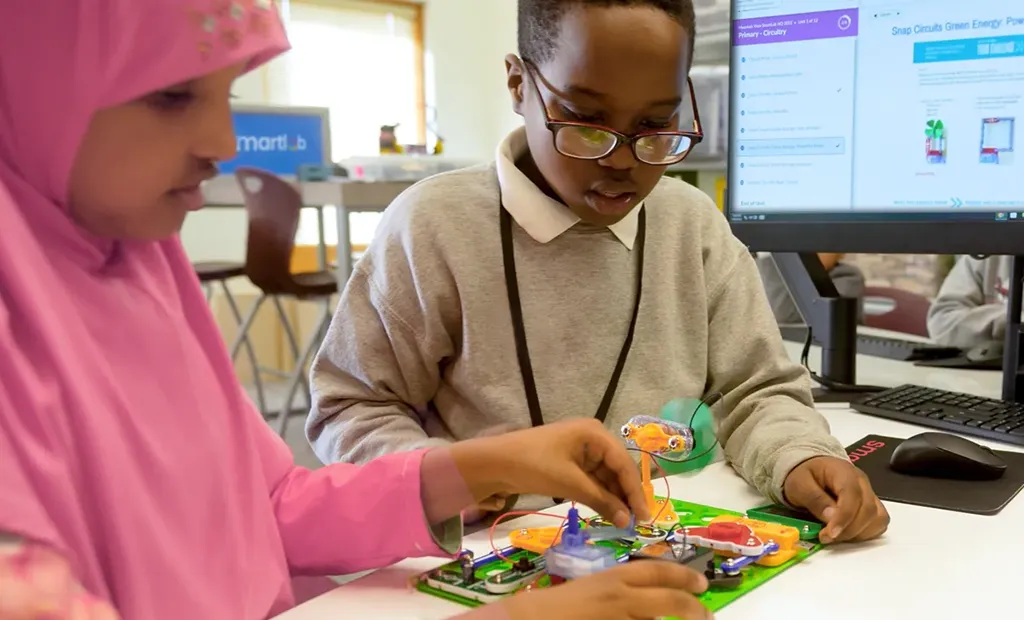
A 2026 study of 1,134 students found that positive pre-college STEM experiences can influence STEM Identity development, with STEM interest and recognition directly predicting STEM Identity.¹
1. Awsaf, A. A., et al. A Structural Equation Model for Youths’ STEM Identity Development: Impact of Contextual STEM Learning Experiences. NARST Annual International Conference, 2026.
How Meaningful STEM Experiences Become Evidence of Student Capability
Research into science and STEM identity has been developing for years, pointing toward an important conclusion: students are continually gathering evidence about whether STEM is a place where they belong. Competence, participation, recognition, interest, and belonging have all been identified as important dimensions of developing STEM Identity. Research has also connected stronger STEM and science identity with engagement, academic performance, persistence, and commitment to STEM pathways.
In other words, students are continually asking themselves, consciously or not: Am I good at this? Do people like me do this? Does my teacher believe I am capable? Does my contribution matter? Is there a place for me here? Could this be part of my future? The learning experiences we create help students answer those questions.
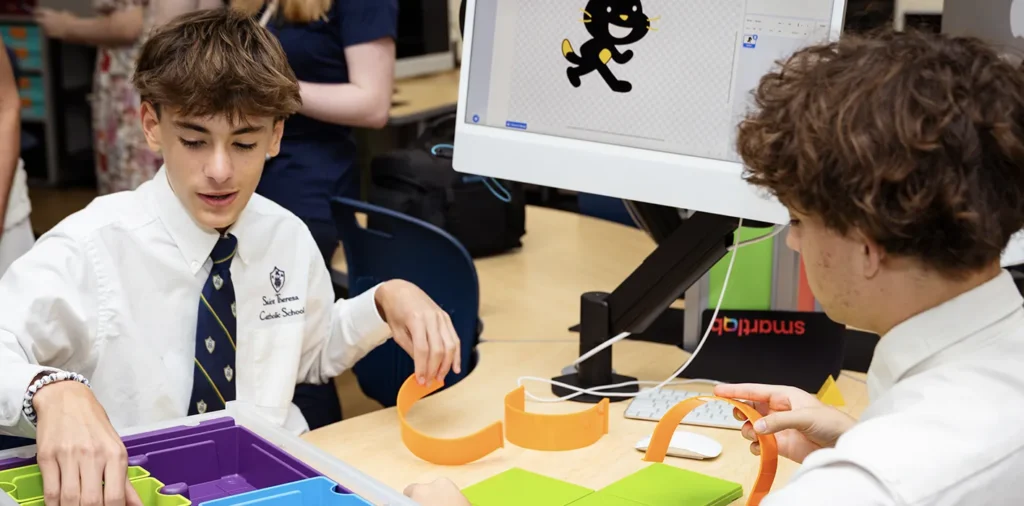
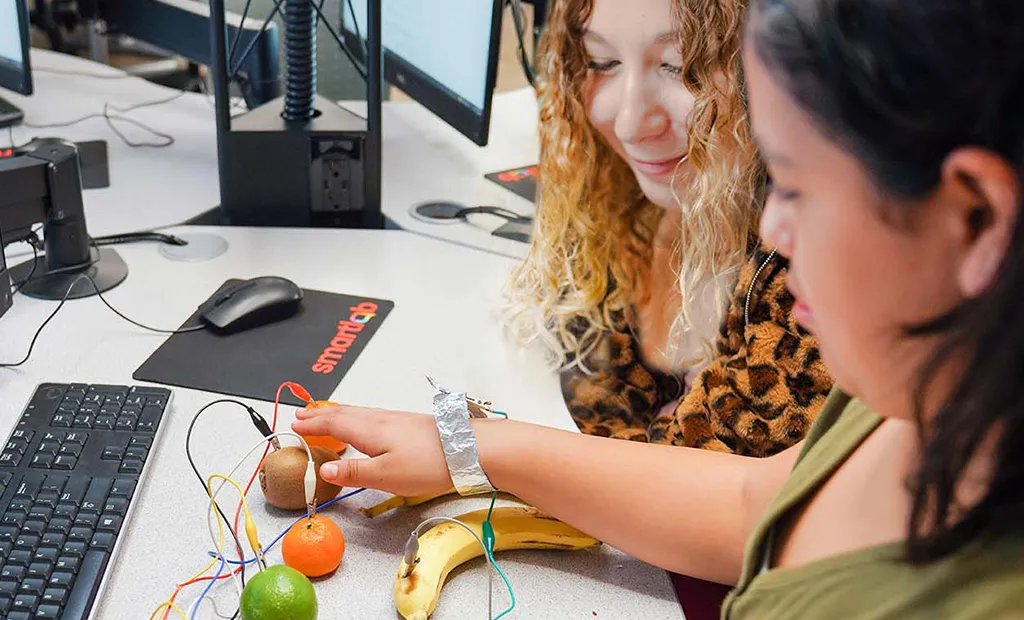
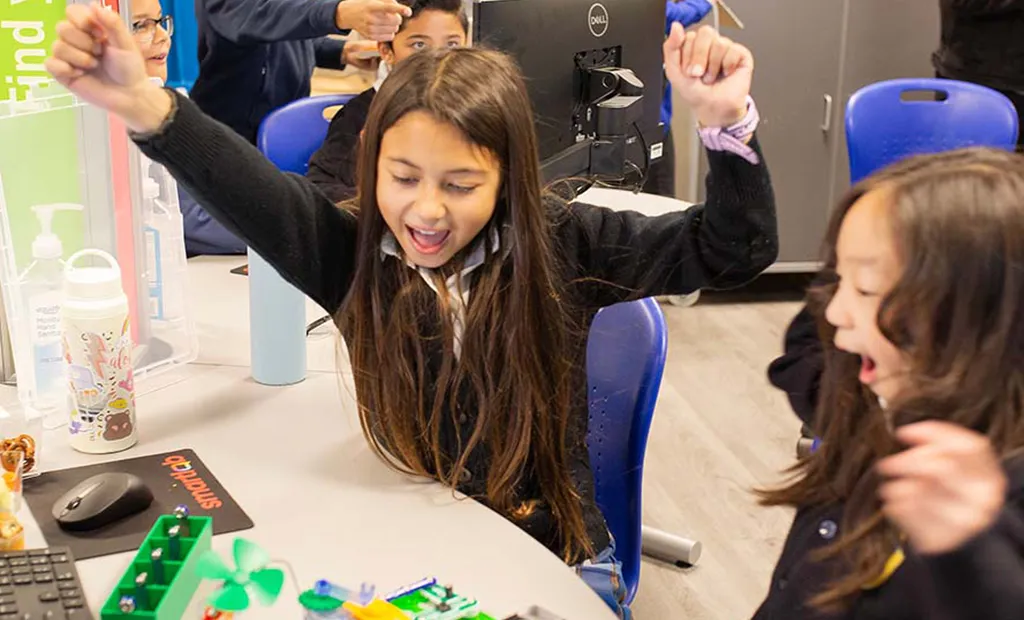
Consider a student who is given step-by-step instructions for assembling a predefined solution. They follow the directions, complete the activity, and move on. That student may leave having done STEM. Now imagine a student presented with a meaningful problem. They explore it, ask questions, discuss possible approaches, choose tools, make decisions, build something, test it, discover it doesn’t work, analyze why, seek feedback, revise, and try again. Eventually, something works, not because someone gave them the answer, but because they made sense of the problem themselves.

“The Elementary SmartLabs have been game-changers by allowing our district to fully integrate and align STEM programming for our K–12 students. The unique methods of engaging students in meaningful, inquiry-based learning experiences are quickly helping our learners develop a stronger STEM identity, and they now see themselves and their futures differently. They believe they can change the future!”
That student has gained more than knowledge about a STEM concept. They have collected evidence about themselves: I can work through something difficult. My ideas are worth testing. Failure doesn’t mean I can’t do this. Other people value my contribution. I can solve a problem I didn’t know how to solve before.
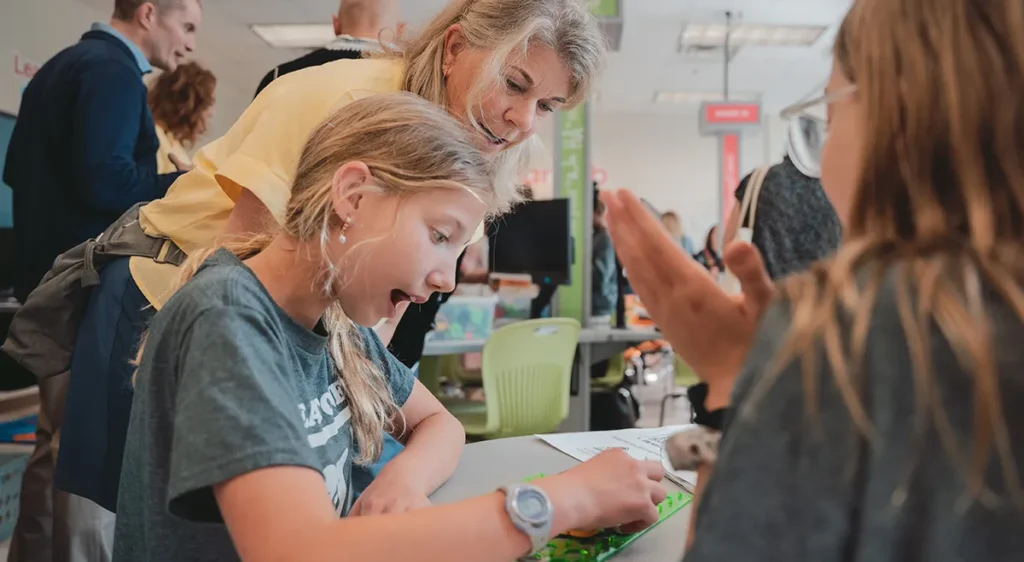
At SmartLab, we call these ah-HA! moments: the moments when curiosity becomes discovery and a learner realizes, I figured it out. One experience may not change how a student sees themselves, but when these experiences happen repeatedly across different challenges, technologies, projects, teams, and applications, they can begin to change a student’s internal story. Curiosity becomes confidence. Confidence supports persistence. Persistence creates more opportunities for discovery. Over time, This is hard, therefore I’m bad at it can become This is hard, so I need another approach.
Belonging and recognition are important parts of that transformation. Teachers, classmates, families, mentors, and professionals all send signals about who is capable of doing STEM. Sometimes those signals are remarkably simple: You thought about that differently than I did. Show us how you figured that out. That didn’t work. What could you try next? I hadn’t considered your approach. These moments do more than provide feedback. They give students evidence about who they are becoming.
Preparing Students to Thrive and Lead in an Unknown Future
The importance of STEM Identity becomes even clearer when we consider the world today’s students will inherit. We cannot know precisely what the world of work will look like when today’s youngest students graduate. We don’t know which technologies will become commonplace, which industries will be transformed, which careers will disappear, or which entirely new careers will emerge. We do know that technology will continue to evolve and AI will continue to change how work gets done.
Students will encounter unfamiliar situations that require them to ask better questions, evaluate information, think critically, collaborate across disciplines, communicate effectively, adapt when conditions change, and create solutions that do not yet exist. Preparing students for that future cannot simply mean giving them the technical skills required for the jobs we know today. We must also help them develop the confidence, resilience, adaptability, curiosity, and agency to approach the unknown.
The future will not simply need people who know how to use today’s technology.
It will need people who believe they are capable of figuring out what comes next.
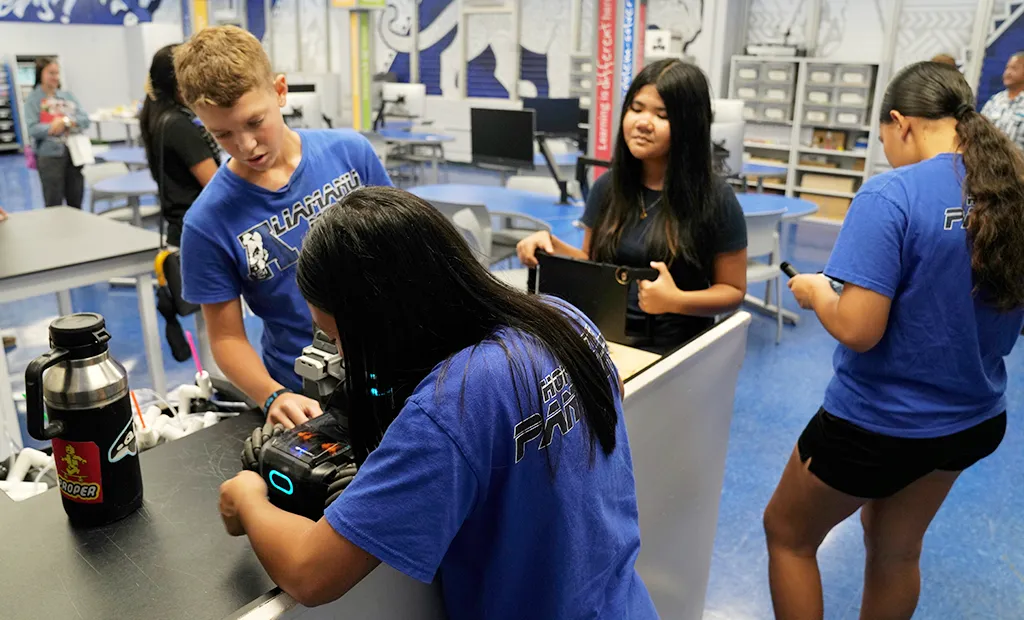
46% of students who saw themselves as a “science person” went on to report a STEM major, compared with only 26% of students who did not see themselves that way.¹
1. National Science Board, National Science Foundation. Science and Engineering Indicators 2022: Elementary and Secondary STEM Education. 2022.
How SmartLab Builds STEM Identity
SmartLab is a career-connected K–12 STEM ecosystem designed to bring together the conditions students need for meaningful, hands-on, project-based learning. The customized STEM learning environment matters. The career-connected curriculum matters. The hands-on tools and equipment matter. The SmartLab Certified Facilitator matters. And ongoing support and partnership matter.
But none of those components exists simply for its own sake. The ultimate outcome is the learner. Technology creates opportunities. Curriculum structures those opportunities. Educators facilitate them. Industry and community partners make them relevant. Together, those elements create an environment where students can repeatedly experience:
Belonging + Challenge + Agency + Contribution + Relevance
That is where STEM Identity can grow. And it changes the way we can think about evaluating a STEM learning experience. Beyond asking whether students completed an activity, we can ask:
• Are students making meaningful decisions and tackling authentic problems?
• Are they handling the tools and technologies themselves while being allowed to struggle, revise, and try again?
• Are their ideas recognized and valued?
• Can they explain their thinking and connect what they are learning to real careers and real-world challenges?
Perhaps most importantly: Do students who once said, I’m not a STEM person, begin speaking differently about themselves? A room filled with technology is not automatically a STEM Identity environment. Neither is a robotics kit, coding platform, or one-day STEM activity.
The question isn’t simply whether students participated in STEM learning. It’s how those experiences shaped what students believe about their own capabilities.
Connecting STEM Identity to the World Beyond the Classroom
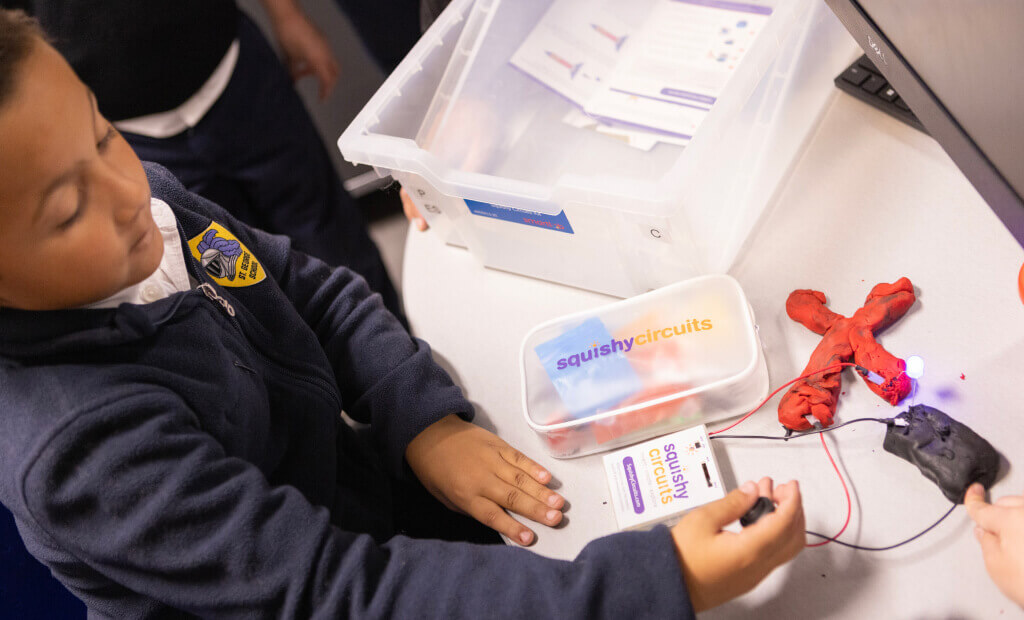
Career-connected learning adds another important dimension because there is an enormous difference between telling students that careers exist and helping them imagine themselves doing the work. A student designing a structure isn’t simply completing an engineering activity. A student programming a robot isn’t simply learning code. A student analyzing environmental data isn’t simply completing a science assignment. A student producing digital media isn’t simply learning software.
Each experience can become an opportunity to wonder: Where could this take me?

“The right project finds the identity for the kid. The kid finds their identity in the project…They come in as kids. They leave seeing themselves as engineers, creators, and collaborators.”
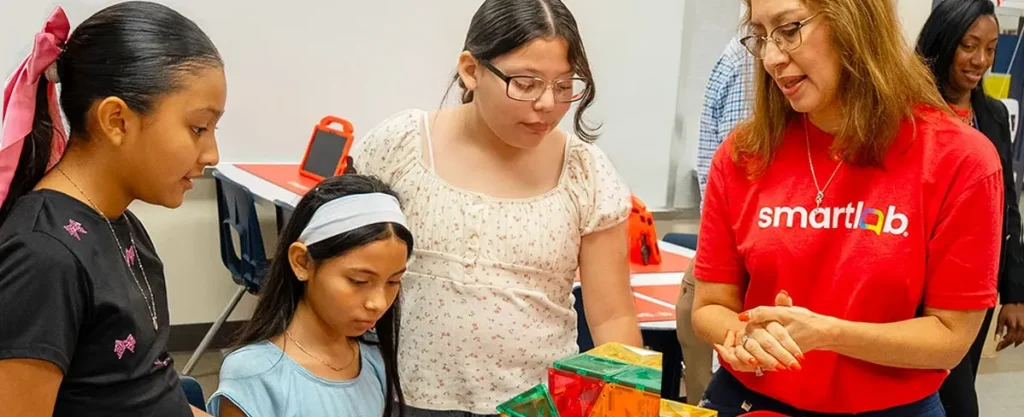
Families, businesses, nonprofits, higher education institutions, mentors, and community organizations can strengthen that connection. That is why career-connected experiences and initiatives like SmartLab STEM Identity Day matter. When professionals share authentic stories about their work, demonstrate the technologies they use, talk openly about challenges they have overcome, and show students how STEM capabilities appear across industries, they expand students’ understanding of what is possible.
An accountant uses data. A nurse uses technology. A marketer runs experiments. A technician diagnoses systems. A filmmaker combines storytelling with technology. A construction manager interprets models. An entrepreneur solves problems. STEM is not a narrow collection of occupations reserved for a particular kind of student. STEM capabilities are woven throughout the modern world.
A ten-minute conversation with a professional may not determine a child’s career. But it might change what that child believes is possible.
The Future Needs Students Who Believe They Can Shape It
Perhaps the most important idea behind STEM Identity is also the simplest: STEM is not reserved for “STEM people.” We should not measure the success of STEM education solely by grades, test scores, completed projects, or how many students ultimately become engineers, scientists, or programmers.
Those outcomes matter. But there is another measure worth considering: What does a student believe about themselves because of the experiences we gave them?
Do they believe: I belong here. I can do this. I add value. I’m future ready.
The point of STEM Identity is not to prescribe a child’s destination. It is to expand the number of destinations they believe are possible.
When students repeatedly experience the satisfaction of solving difficult problems, see their ideas make an impact, discover that failure is part of progress, and recognize that their perspective has value, STEM stops being something happening around them. It becomes something they believe they can participate in and, eventually, something they believe they can use to shape what comes next.
At SmartLab, we aren’t simply preparing students for the world they’ll inherit. We’re helping them develop the STEM Identity to believe they can help shape the world that comes next.
Build What’s Next
for Your Students!
We put our customers at the center of everything we do.
We partner with them to ensure long-term, sustainable impact.