Understanding the ROI of STEM Education: Key Benefits for Schools and Students
Investing in STEM education is a strategic necessity for schools preparing students to succeed in an increasingly complex, technology-enabled world. When designed intentionally, STEM learning strengthens academic performance, builds durable life and career skills, and helps students connect learning to high-growth, high-paying fields. Beyond the classroom, strong STEM programs also contribute to broader economic and societal benefits, positioning schools as long-term partners in developing future-ready learners and communities..
What Is the ROI of STEM Education?
When schools consider investing in STEM education, one of the most important questions they must answer is: What is the long-term return? While short-term academic indicators such as test scores and classroom performance matter, the true return on investment in STEM education extends further. Meaningful ROI includes outcomes that influence student readiness, educator sustainability, school systems, and the long-term economic health of the communities schools serve.
Impact on Student Success and Achievement
A strong, intentionally designed STEM foundation can have a measurable impact on student outcomes, both in and beyond the classroom. Schools that invest in coherent, high-quality STEM learning experiences often see improvements across key academic and engagement indicators, including:
- On-time graduation: High school students who develop a positive mindset toward STEM-related subjects are more likely to graduate on time. Research from the National Assessment of Educational Progress (NAEP) indicates that students’ attitudes toward math during their freshman year are predictive of on-time graduation. Perceptions of math and science learning are also associated with later enrollment in STEM-related fields, highlighting the importance of early engagement and confidence-building in STEM.
- Improved test scores: High-quality STEM learning strengthens core competencies in math, science, and technology by engaging students in applied problem solving and critical thinking. When students understand how concepts connect and apply to real-world contexts, they are better prepared to demonstrate mastery on standardized assessments.
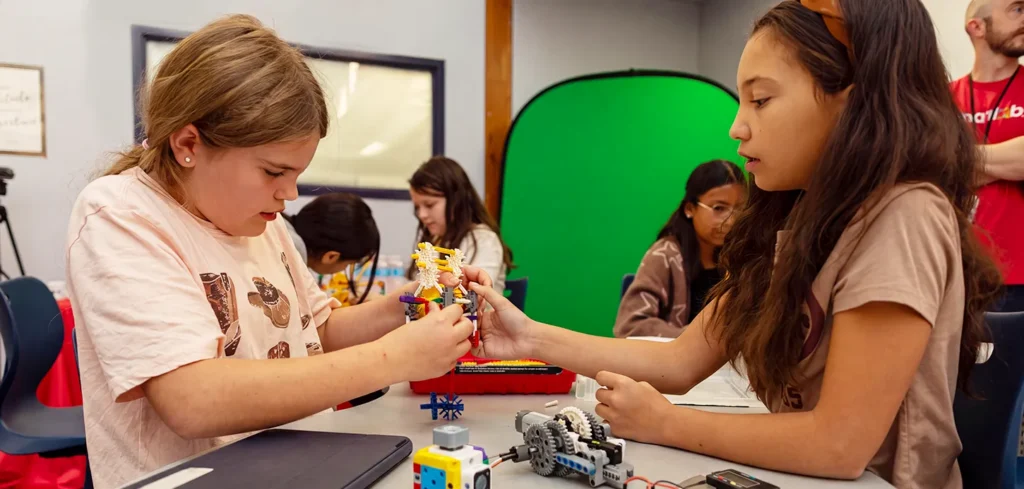
- Increased classroom engagement: STEM learning often incorporates hands-on, project-based approaches that emphasize relevance and application. When students see how their learning connects to real-world challenges, engagement increases through greater motivation, collaboration, and curiosity.
Beyond traditional academic metrics, well-designed STEM instruction also builds durable skills that students carry throughout their education and into future careers. These skills include:
- Critical thinking: STEM learning helps students analyze information, evaluate options, and make evidence-based decisions in complex and evolving situations.
- Problem-solving: STEM challenges encourage students to approach obstacles systematically, test possible solutions, and iterate based on evidence and outcomes.
- Creativity and innovation: STEM learning invites students to design, build, and experiment, strengthening their ability to generate ideas, explore alternatives, and develop innovative solutions
- Collaboration and communication: Group-based STEM work helps students learn to collaborate effectively, communicate ideas clearly, and share findings through discussion, documentation, and presentation.
Career Readiness and Employment Opportunities
Investing in STEM education is one of the most effective ways to prepare students for the evolving job market. Many of today’s fastest-growing fields depend on STEM-based roles, and schools play an integral role in helping students develop the knowledge, confidence, and career awareness needed to pursue high-demand, high-paying pathways over time.
A high-quality STEM education lays the foundation for future career readiness by:
- Preparing students for in-demand jobs: STEM occupations continue to outpace overall job growth, with employers seeking individuals who can problem-solve, analyze data, apply technology, and think creatively. A strong STEM foundation helps students develop these transferable skills early, preparing them to adapt and succeed in rapidly changing fields.
- Opening doors to high-earning career paths: Careers across STEM-related industries consistently rank among the highest paying. Early exposure to STEM concepts, tools, and ways of thinking helps students build familiarity and confidence, making it more likely they will pursue and persist in these career pathways over time.
- Building technical and digital literacy: From robotics and coding to scientific reasoning and data analysis, STEM learning develops the technical and digital fluency that nearly every industry now requires, including roles not traditionally labeled as STEM.

Economic and Societal Benefits of STEM Education
The value of STEM education extends far beyond individual student outcomes. At both community and national levels, strong STEM programs contribute to economic growth, innovation, and workforce stability. As the institutions where STEM skills are first developed and nurtured, schools play a critical role in shaping the economic future of the regions they serve by:
- Producing a highly skilled workforce. STEM-related occupations are among those projected to experience significant growth. When K–12 schools intentionally cultivate foundational STEM skills early, they help build a sustainable pipeline of learners prepared to step into critical roles as industries evolve.
- Driving innovation: STEM education encourages creative and analytical thinking, enabling future professionals to approach challenges from multiple perspectives. This mindset fuels the development of new products, technologies, and processes that strengthen long-term economic competitiveness.
- Supporting job creation. Innovation expands existing industries and gives rise to new ones, driving job creation across the economy. By preparing students to contribute to high-growth sectors, STEM education supports broader economic activity and the development of new employment opportunities.
The Role of STEM Education in Closing Achievement Gaps
Achievement gaps in STEM refer to persistent disparities in math and science outcomes, often along racial, ethnic, and socioeconomic lines. These gaps influence access to advanced coursework, postsecondary readiness, and long-term career opportunities. When students lack early access to high-quality STEM learning, support, and enrichment, they are less likely to pursue STEM pathways later in their academic journeys.
Research shows that these gaps emerge much earlier than many educators expect. A study led by the Penn State College of Education found that racial and ethnic disparities in advanced math and science achievement are already visible by kindergarten. This early divergence matters, as students who demonstrate strong STEM learning early on are significantly more likely to take advanced coursework, engage deeply with STEM subjects, and pursue STEM-related fields in adulthood.
These early gaps often reflect differences in access to high-quality instruction, enrichment opportunities, and early academic support. Students from historically underserved communities are less likely to experience consistent, high-quality STEM learning in the early grades. Without intentional, system-level intervention, these disparities can widen over time.
High-quality, equitable STEM education can play a transformative role in narrowing these gaps by:
- Broadening access to advanced skills. When schools provide inclusive, hands-on STEM learning opportunities in the early grades, more students develop the foundational knowledge and confidence needed to succeed as STEM learning becomes more advanced.
- Increasing confidence and engagement. Culturally responsive instruction, diverse role models, and collaborative learning experiences help students, particularly those historically underrepresented in STEM, see themselves as capable scientists, engineers, and problem-solvers.
- Identifying potential early. Universal screening and early STEM assessments can help educators recognize strengths and potential in students who might otherwise be overlooked, enabling timely support and enrichment.
ROI of STEM Education in Action: Example
When implemented with intention and equity, investments in STEM education yield measurable results. The example below illustrates how these investments translate into meaningful benefits for students, schools, and communities.
Economic ROI
National data reinforces the broader economic return on investment that STEM education delivers:
- The National Science Foundation (NSF) reports that the U.S. STEM workforce has continued to expand over the past decade, increasing from 22% to 24% of the civilian workforce between 2011 and 2021.
- The U.S. Bureau of Labor Statistics (BLS) echoes this trend reporting that STEM occupations are expected to grow at nearly three times the rate of non-STEM employment between 2023 and 2033, underscoring the need for a well-prepared talent pipeline.
- This demand also translates to strong economic outcomes for students. According to the NSF, full-time STEM workers earn a median salary that’s nearly $20,000 greater than their non-STEM counterparts.
Investing in STEM education is a long-term commitment to students, schools, and the broader community. From improved academic outcomes and increased career readiness to stronger local economies and greater equity, the return on investment extends far beyond the classroom. By equipping learners with the skills, confidence, and problem-solving mindset needed to thrive in a technology-driven world, schools help build a more innovative and resilient future.
As district leaders and educators look ahead, sustainable STEM funding and strategic planning will be essential to building strong, lasting programs. To help you take the next step, we created a comprehensive resource that outlines sustainable funding strategies to fuel STEM initiatives, including tips for demonstrating the value of STEM education to key stakeholders, building ongoing funding plans, and sustaining impact over time.