How to Implement a STEM Program in K–12 Schools: Essential Resources and Infrastructure
When it comes to the workforce, demand for STEM roles is set to define the future. The U.S. Bureau of Labor Statistics (BLS) predicts that employment for STEM-based occupations will grow 8.1% by 2034 (that’s a rate nearly three times as fast as all other occupations). Preparing students for this eventuality starts with giving them the right kinds of learning experiences throughout their education — ones that go beyond textbooks and encourage curiosity, experimentation, and problem-solving. A well-designed STEM program can do exactly that if it has the resources and infrastructure that support it.
From physical learning spaces to educator training, technology investments, and community partnerships, the foundation that districts or individual schools build today will determine the impact a STEM program will have for years to come. This guide walks through what administrators, educators, and district leaders should keep in mind when planning K–12 STEM initiatives, along with the key benefits these programs bring to students and educators.
The Benefits of a K–12 STEM Program
When learning becomes hands-on and inquiry-driven (another hallmark of a STEM program that’s working as intended), schools begin to see positive shifts in their students’ academic growth. These programs create environments where curiosity is valued, experimentation is encouraged, and problem-solving becomes a natural part of the learning experience. And it’s not just students who benefit — in the STEM classroom, teachers also get to bring lessons to life in ways that reignite their own passion for teaching.
Benefits for Students
- Stronger problem-solving and critical thinking skills: STEM classrooms give students repeated opportunities to analyze problems, test potential solutions, and refine their ideas. Instead of following pre-determined steps, students learn to make decisions and pivot when their first attempt doesn’t work. These skills transfer directly to scenarios students will encounter outside the classroom, preparing them for increasingly complex academic and career pathways.
- Increased engagement: When students are given the opportunity to experiment freely and take part in hands-on activities such as designing and building prototypes or coding challenges, learning becomes more engaging and meaningful. These tasks foster curiosity and allow students to take ownership of their projects. Over time, students develop a deeper understanding of concepts because they’ve directly engaged with them — not just read about them in a textbook.
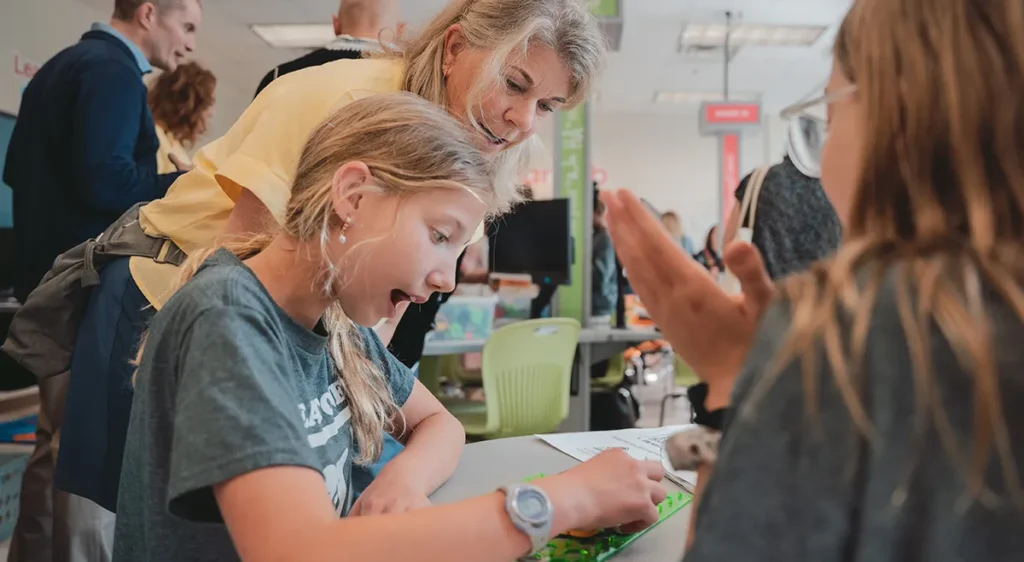
- Greater academic confidence: Over time, exposure to STEM helps students see themselves differently. In the SmartLab, we call these turning points ah-HA! moments — those sparks of excitement when a concept clicks, a design works, or a solution comes together. When learners have repeated opportunities to design, build, code, and experiment, these ah-HA! moments accumulate into something bigger: a strong STEM identity. They begin to imagine themselves as engineers, scientists, designers, or researchers. That shift in identity, especially for underrepresented learners, is part of what makes STEM such a powerful educational investment.
- Improved collaboration and communication skills: Many STEM activities require students to work in teams, share ideas, and negotiate solutions. As they collaborate, they learn how to articulate their thinking, actively listen to others, and navigate varying viewpoints. These interpersonal skills support academic success across subjects and are highly valued in the workplace.
Benefits for Teachers
- More dynamic and creative instructional opportunities: STEM programs encourage educators to experiment with new teaching strategies, integrate technology into the lesson plan, and design learning experiences that feel fresh and engaging. This shift away from traditional lecture-based instruction may be the spark that reignites a teacher’s enthusiasm for the classroom. In an environment that encourages experiential learning, educators have more freedom to guide students through discovery rather than simply passing along information.
- Strengthened professional collaboration: In STEM programs, teamwork isn’t only reserved for students. STEM initiatives naturally create opportunities for teachers to collaborate. Math, science, technology, and even humanities teachers often join forces to design interdisciplinary units that feel more relevant and connected for students. These partnerships help build a stronger professional community within schools and improve instructional consistency across subjects.
- Ongoing professional growth and skill development: Implementing STEM programs (can and should) come with dedicated professional development opportunities, giving teachers the chance to build new technical and instructional skills. Educators gain confidence working with unfamiliar tools, guiding inquiry-based learning, and integrating technology into the classroom. This continuous growth supports both teacher satisfaction and long-term program quality.
- Better student outcomes: For many teachers, one of the most rewarding parts of the job is seeing their students become invested in learning. When students are excited about projects and eager to solve challenges, classroom dynamics shift positively. Higher engagement often leads to fewer behavioral issues and more meaningful interactions between teachers and students.
What to Keep in Mind When Implementing a K–12 STEM Program
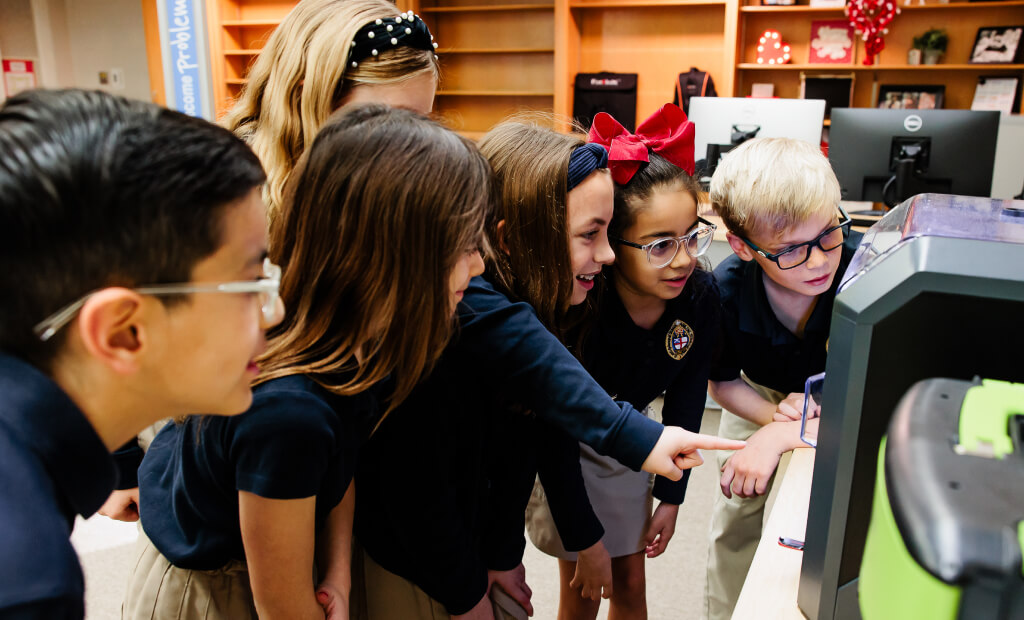
Bringing a STEM initiative to life is a multi-layered process. Each decision — from technology selection to classroom design — shapes how effectively students will navigate the program. Not sure how to approach STEM program development? Keeping the following considerations in mind is a good place to start.
The Role of Infrastructure in STEM Education
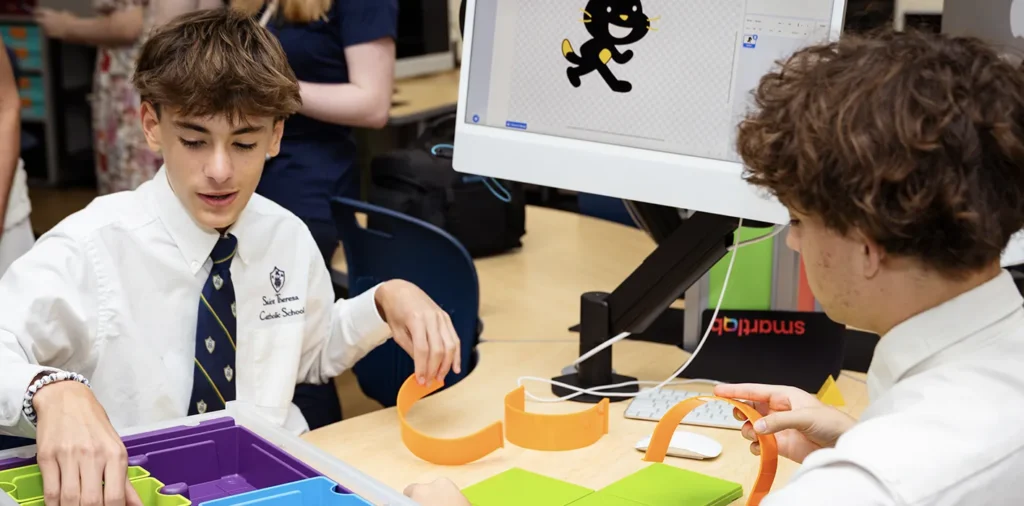
Infrastructure in STEM programs encompasses the physical spaces, tools, systems, and instructional supports that make inquiry-based learning possible. When students walk into a space intentionally designed for building, testing, designing, and exploring, it sets the tone for how they engage and, just as importantly, how they see themselves within it.
Well-planned infrastructure communicates that innovation matters. But it also sends a deeper message to learners: “You belong here.” When a space is thoughtfully designed with students in mind, it signals that their curiosity is expected, their experimentation is welcome, and their ideas have a place to grow. It gives students consistent access to environments where trial and error is encouraged, hands-on experimentation is normal, and collaboration has room to happen naturally. This might include elements such as:
- Purpose-built science, computer, engineering, or robotics labs
- Classrooms arranged for group interaction and student agency
- Reliable, high-speed connectivity
- Digital platforms that support research and creation
For students who have never seen themselves as “STEM people,” walking into a well-designed STEM space can mark the beginning of that change. Ultimately, the goal is to create a learning ecosystem where STEM thinking and STEM identity can thrive every day.
Flexibility of Physical Resources
Hands-on work is at the heart of STEM learning, and the physical environment is what makes it possible. That’s why the most successful STEM programs prioritize creating learning spaces that can easily adapt to different types of projects.
Mobile furniture, wide-open floor plans, and surfaces designed for sketching or constructing allow for seamless transitions between direct instruction, team-based projects, and independent exploration. Thoughtfully designed learning environments make it easier to scale STEM programs over time as student needs evolve and new disciplines and technologies are developed. More than that, they create the conditions for ah-HA! moments to happen naturally, and it’s those moments, repeated over time, that shape how students see themselves within STEM.
Technology and Equipment
Technology is a core component of modern STEM education, but its effectiveness depends on thoughtful selection and, more importantly, on how it’s used. Devices such as laptops, desktop computers, or tablets support research, coding, simulations, and design work. Specialized software enables students to model scientific processes, create 3D renderings, or run virtual experiments that would otherwise be too costly or complex to conduct in person. But while the technology itself is necessary to facilitate learning, it’s only as effective as the environment allows. For example, simulation software becomes meaningful only when students use it to test a hypothesis they formed, not simply to follow a predetermined set of steps toward an expected outcome.
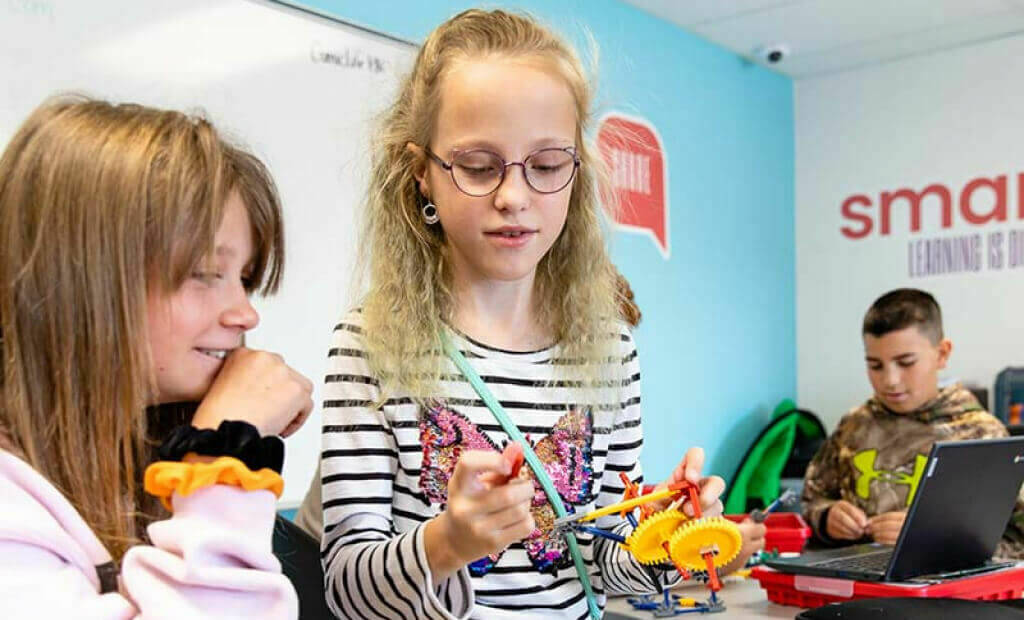
The same is true for hands-on tools. Robotics kits, circuit sets, 3D printers, and engineering challenge kits only reach their potential when they’re embedded as part of open-ended challenges (situations where there’s no single correct answer, and where what gets built, tested, or designed is learner-guided). It’s these moments of inquiry that transform objects in a room into instruments of discovery. These experiences fill the space between “learning about” and “learning through doing,” and deepen both understanding and engagement.
Qualified Personnel and Training
No STEM program can succeed without confident, well-prepared educators. Even the most advanced lab will fall short if teachers aren’t equipped to guide inquiry-driven learning or meaningfully integrate technology into instruction. Districts often face STEM-teacher shortages, so many schools turn to professional development to upskill existing faculty members.
Ongoing training — whether through workshops, coaching, collaborative planning, or micro-credentialling — helps educators stay current with evolving tools and teaching strategies.
Budgeting for Infrastructure and Resources
Launching a STEM initiative involves balancing immediate needs with long-term sustainability. When starting out, schools typically face significant upfront costs in the form of furniture, devices, lab equipment, and software licenses, to name a few, but must also plan for ongoing maintenance, replacing consumables, and regular upgrades. Without this long-term view, a program can quickly become outdated.
Districts often rely on a combination of funding sources to support STEM investments, including federal and state grants, support from education foundations, partnerships with local industries, and philanthropic contributions. Sustainable programs also prioritize durability and versatility, investing in foundational tools and expanding gradually as budget allows.
External Partnerships and Community Engagement
A successful STEM program rarely operates in isolation. Partnerships with local businesses, universities, and research organizations provide context for student learning and visibility into what could come next after high school or college graduation. Guest speakers, mentorships, field trips, and donated equipment can enhance classroom learning and spark motivation in students.
Families and community members also play a crucial role. Whether assisting with fundraising or volunteering at events (such as robotics competitions or STEM showcase nights), community involvement increases exposure and builds momentum around the program. It reinforces the idea that STEM learning isn’t just limited to the school day; it’s a shared priority that can bring communities together.
Planning for Accessibility and Equity
Equity must be central to every STEM planning conversation. True accessibility means ensuring that all students, regardless of background, socioeconomic status, learning needs, or prior exposure, have the opportunity to participate in the program. This might require device-loan programs, multilingual family communication, structured support for historically underrepresented students, or low-cost afterschool programs.
Inclusive design also matters. Classrooms should be physically accessible, and curriculum materials should reflect diverse identities and experiences. When students see themselves represented in both the content and learning environment, they’re more likely to develop confidence in STEM subjects and pursue related pathways.
Curriculum
Curriculum is what transforms a well-equipped STEM space into a coherent learning experience. For STEM programs specifically, the most effective curricula are built around career-connected, project-based learning that encourages students to solve real-world challenges rather than simply complete assignments. When students work on problems that mirror what engineers, scientists, and designers actually do, the learning becomes meaningful in a way that a textbook cannot.
It’s also important for the curriculum to be interdisciplinary. STEM subjects don’t exist in silos, and the strongest programs reflect that by weaving together science, math, technology, and design thinking to show students how knowledge flows between disciplines. A curriculum built around open-ended challenges, student agency, and practical application creates the conditions for ah-HA! moments that build STEM identity over time. When evaluating or selecting curriculum, look for frameworks that are flexible enough to grow with your program, connected to relevant career pathways, and designed for all learners.
Take the Next Step Toward a High-Impact STEM Program
Implementing a K–12 STEM program is both an investment and an opportunity — one that can transform learning across an entire school or district. With intentional planning, thoughtful resource allocation, and prioritized educator support, STEM initiatives become valuable, sustainable programs that unlock student creativity and curiosity.
A future-ready STEM begins with a strong foundation. By building the right infrastructure today, schools can create learning environments where innovation thrives. Is your school ready for a STEM transformation? Download our free eBook, Funding STEM for the Long Term, to get started.