Funding Pathways for Private Schools: Turning Vision into Reality
Expanding Future-Ready STEM Learning Starts with a Funding Strategy
Across the country, private schools are exploring new ways to prepare students for an increasingly complex and technology-driven future. As demand grows for high-quality career-connected STEM education and hands-on, project-based learning experiences, schools are investing in programs that strengthen academic excellence while preparing students with the durable skills needed for college, careers, and life.
Yet for many school leaders, the conversation often stalls at the same point:
How do we fund it?
The good news is that successful private schools rarely rely on a single funding source. Instead, they build a thoughtful funding strategy that aligns institutional priorities, donor interests, and long-term academic goals.
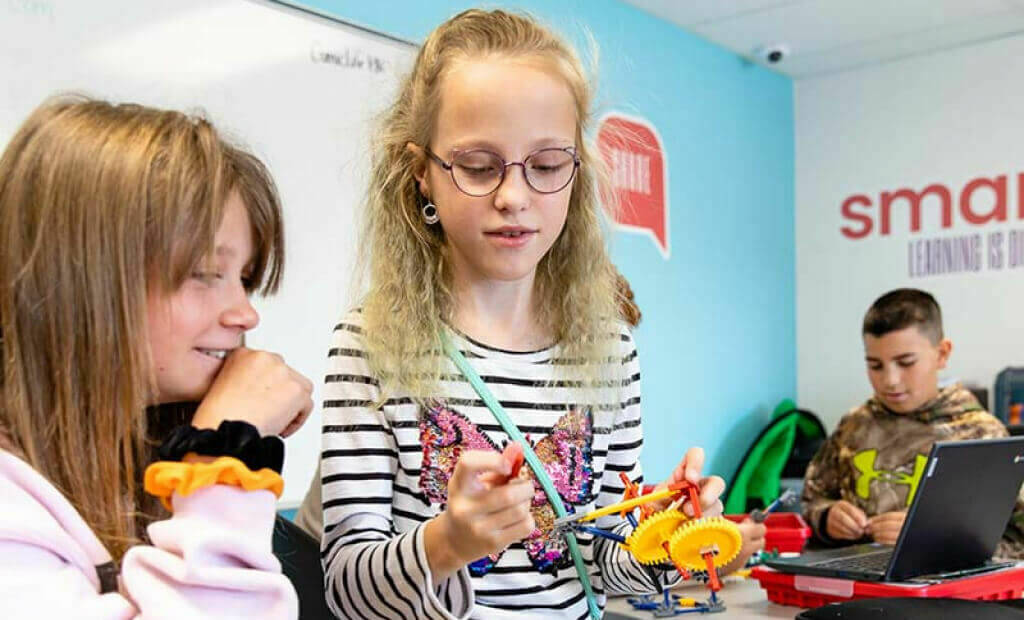
When approached strategically, a SmartLab is not simply a capital purchase. It becomes a visible investment in student success, innovation, and mission fulfillment. It also becomes a differentiator for prospective families who are increasingly seeking schools that prepare students with future-ready skills through authentic, hands-on learning experiences. With the right funding strategy, schools can move beyond budget constraints and focus on creating transformational learning experiences for students.
Why Funding Conversations Often Feel Challenging
School leaders are balancing multiple priorities at once:
• Maintaining operational stability
• Managing facilities and infrastructure needs
• Supporting faculty and staff
• Investing in new academic opportunities
• Planning for long-term sustainability
Because of these competing priorities, innovative programs are often viewed as “future investments” rather than immediate needs. However, schools that successfully launch transformative programs often start by reframing the conversation. Instead of asking, “Can we afford this?” they begin with a different question:
What experiences do we want our students to have that they cannot access today?
That shift moves the discussion from cost to impact.
The Most Common Funding Pathways for Private Schools
While every school’s funding model is unique, some approaches consistently emerge among successful implementations.
1. Donor and Advancement Support
For many private schools, advancement and fundraising efforts provide the strongest pathway to implementation. SmartLab initiatives naturally align with donor interests because they are highly visible, student-centered, and future-focused.
Because SmartLab provides a purpose-built STEM learning environment with measurable student outcomes, it gives advancement teams a compelling story to share with prospective donors and foundations. Donors aren’t simply investing in technology; they’re investing in meaningful learning experiences that prepare students for the future.
Donors often respond positively when SmartLab is positioned as:
• A signature academic program
• An innovation initiative
• A workforce-readiness investment
• A tangible demonstration of the school’s commitment to future-ready learning
Schools frequently leverage:
• Lead donors
• Alumni contributions
• Capital campaigns
• Naming opportunities
• Innovation-focused fundraising initiatives
Because donors can see and experience the impact firsthand, SmartLab often becomes a compelling centerpiece for advancement efforts.
2. Strategic Investment Funds
Many schools choose to fund innovation initiatives through strategic planning budgets or capital improvement allocations. Rather than viewing STEM and experiential learning as separate programs, these schools treat them as foundational elements of their long-term academic strategy. Many schools also align SmartLab with strategic priorities related to enrollment growth, academic differentiation, and preparing graduates for an AI-powered world. When SmartLab is connected to strategic priorities such as enrollment growth, academic differentiation, student engagement, or college and career readiness, it often becomes easier to justify as a long-term investment.
3. Phased Implementation
One of the most effective approaches for schools seeking flexibility is phased implementation. Rather than launching everything at once, schools can begin with a focused deployment and expand over time.
Benefits of a phased approach include:
• Lower initial investment
• Opportunity to demonstrate early impact
• Greater fundraising flexibility
• Reduced implementation risk
• Increased stakeholder confidence
Many schools find that early success creates momentum that attracts additional donor and community support.
4. Foundations and External Funding
Private and family foundations continue to support initiatives focused on:
• STEM education
• Innovation
• Workforce development
• Technology integration
• Student opportunity and access
While grants rarely serve as the sole funding source, they can help accelerate implementation when paired with internal investments and donor support. The strongest grant applications typically connect funding requests directly to measurable student outcomes and long-term program sustainability. Many private and family foundations are especially interested in supporting initiatives that demonstrate innovation, measurable student outcomes, community impact, and long-term sustainability.
Why Mission Alignment Matters More Than Technology
One common mistake schools make is presenting STEM investments as equipment purchases. The most successful schools tell a different story.
They position SmartLab as:
• A platform for creativity
• A hub for collaboration
• A driver of problem-solving
• A catalyst for student engagement
• A vehicle for developing future-ready skills
This distinction matters because donors, boards, and school communities invest in outcomes, not equipment.
When school leaders frame SmartLab around student transformation instead of technology, conversations naturally shift toward the lasting impact on students. Donors begin to see an investment in curiosity, confidence, creativity, collaboration, and future readiness rather than simply purchasing equipment.
When connected to your school’s mission, strategic plan, and the outcomes you want for your students, SmartLab becomes an extension of your vision rather than an additional expense.
Building a Sustainable Funding Strategy
The strongest implementations typically combine multiple funding sources rather than relying on a single solution. Successful schools recognize that long-term innovation is rarely funded through one grant, one donor, or one budget line. Instead, they develop a diversified funding strategy that aligns institutional priorities, advancement efforts, and community support.
By building multiple pathways for investment, schools gain greater flexibility, reduce financial risk, and create a more sustainable foundation for future growth. This approach also allows school leaders to adapt as new opportunities emerge, whether through donor engagement, strategic initiatives, or community partnerships.
A sustainable funding strategy may include:
• Advancement campaigns
• Alumni engagement
• Foundation support
• Strategic budget allocations
• Community partnerships
• Corporate sponsorships
• Planned giving and legacy gifts
This diversified approach reduces risk and creates long-term stability. More importantly, it allows schools to focus on educational impact rather than annual funding uncertainty.
Begin with Your Educational Vision
If your school is exploring STEM, innovation, design, or experiential learning initiatives, the first conversation does not need to be about budgets.
Instead, begin by defining the learning experiences you want students to have and the outcomes you want them to achieve. When schools lead with vision rather than cost, funding decisions become more strategic and opportunities often become easier to identify. A clear understanding of your goals also helps donors, trustees, and community partners see the lasting value of investing in your students.
Start by asking:
• What learning experiences do we want students to have?
• How does this support our mission and strategic plan?
• Which stakeholders would be most excited to champion this vision?
• What funding pathways already exist within our community?
These conversations create alignment among school leaders, advancement teams, and potential supporters before funding decisions are made. They also help establish a shared vision that makes it easier to build momentum, identify the right funding partners, and develop a sustainable path forward.
Once those questions are answered, the funding conversation often becomes far more manageable because everyone is working toward a common goal: creating meaningful learning experiences that prepare students for the future.
The Opportunity Ahead
Private schools have a unique advantage when it comes to innovation. They often have the flexibility to move quickly, align new initiatives closely with their mission, and engage passionate supporters who believe deeply in the school’s vision and the success of its students.
The schools making the greatest impact aren’t waiting for the perfect funding source to appear. Instead, they are developing thoughtful, strategic funding pathways that combine institutional priorities, advancement efforts, donor support, and community partnerships. By taking this long-term approach, they are creating sustainable programs that continue to grow and evolve for years to come.
A SmartLab is more than a STEM learning environment. It is a career-connected STEM learning ecosystem designed to prepare students for the future. It is also an investment in the future of your students and your school. It creates opportunities for learners to develop critical thinking, creativity, collaboration, communication, and problem-solving skills through authentic, career-connected STEM experiences that prepare them for an increasingly complex world.
With the right plan and the right funding strategy, a SmartLab becomes more than a STEM program. It becomes a visible expression of your school’s commitment to innovation, future-ready learning, and preparing every student to thrive in college, careers, and life. The journey begins with a conversation, a vision for what’s possible, and a commitment to creating extraordinary opportunities for every learner.