How AI Is Shaping the Future of STEM Education & Learning
Artificial intelligence is rapidly transforming the world around us, and education is no exception. From adaptive learning platforms to virtual lab assistants, AI is beginning to change how students learn and how teachers teach, especially in critical STEM subjects.
As classrooms evolve to reflect the demands of a tech-driven world, integrating AI into STEM education is becoming less of a novelty and more of a necessity. Here’s what you need to know about how using AI in the classroom reshapes STEM learning, the tools making it possible, and what it means for educators, students, and the future of education.
AI in STEM Education
Artificial intelligence (AI) involves machines and systems that can mimic human intelligence and are thus capable of learning from data, recognizing patterns, solving problems, and understanding language. From voice assistants and recommendation algorithms to autonomous vehicles and predictive analytics, AI is quickly becoming a cornerstone of modern life, influencing everything from how we shop and communicate to how we provide healthcare and manage global logistics.
With AI becoming so engrained in daily life, the consensus amongst experts is that it’s here to stay. Because of this, STEM education (an interdisciplinary approach to teaching science, technology, engineering, and math) is more important now than ever. These subjects equip today’s students with the skills they’ll need to thrive in an increasingly digital and innovation-driven economy as the professionals of tomorrow.
AI also plays a part in helping students realize their full potential. Its integration into STEM education is reshaping how these subjects are taught and learned. For educators and students alike, this convergence presents new opportunities to rethink traditional teaching methods and embrace more interactive and adaptive approaches to STEM learning.
AI in the Classroom: Uses of Artificial Intelligence in STEM Education
Artificial intelligence is already making a tangible impact in STEM classrooms, with both teachers and learners benefiting from a growing range of aids that enhance learning and make education more dynamic and responsive.
AI-powered tools
A variety of intelligent technologies are being used to support STEM learning. Platforms like Carnegie Learning, Squirrel AI, and Khanmigo (an AI-powered tutor from Khan Academy) use machine learning algorithms to guide students through math, science, and coding topics at their own pace. Additionally, virtual lab simulations powered by AI, such as Labster, allow students to safely conduct complex science experiments, often from their own devices.
Personalized learning
One of AI’s most effective contributions to education is its ability to tailor learning experiences to individual students. Adaptive learning systems analyze how a student interacts with the material, then adjust lessons in real time based on their preferences and performance. This helps ensure that learners stay challenged without feeling overwhelmed; it also allows those who need more time or practice to get targeted support without stigma.
Self-Assessment and Deeper Understanding With LLMs
Large language models (LLMs), such as ChatGPT, are valuable tools for helping students reflect on and assess whether they truly grasp the underlying principles of STEM concepts. By crafting prompts or asking targeted questions, students can leverage these tools to test their comprehension of key concepts covered in class. For example, after completing a coding task or math problem, a student might ask an LLM to explain the logic behind the solution or to challenge them further with a variation of the problem.
Automation and efficiency
For educators, AI offers welcome relief from time-consuming tasks. Tools that automate grading, track student progress, generate performance reports, and the like can reduce administrative burdens. This gives teachers more time to focus on what they do best: guiding student learning.
For Students: Try These Prompts to Assess Understanding
Encourage students to ask the following questions using an AI tool like ChatGPT:
- “Please explain how [concept] works in simpler terms. I want to make sure I really get it.”
- “Can you give me a new problem that uses the same concept, but in a different way?”
- “I solved this equation: [insert work]. Did I do it correctly, and can you explain why each step does (or doesn’t) work?”
- “Can you quiz me on [topic] with a few questions that increase in difficulty?”
- What part of my solution shows I understand the ‘why’ and what looks like I don’t quite get it yet?”
Looking for more questions to ask? Check out our guide for additional examples and tips for prompting LLMs.
Benefits of AI in the Classroom
The integration of AI (both LLMs and other AI-powered learning tools) into STEM education is doing more than modernizing the classroom; it’s also enriching how students learn and how educators teach. By making learning more adaptive, accessible, and engaging, AI helps students prepare for both academic success and real-world challenges by:
- Facilitating enhanced learning experiences: AI brings STEM subjects to life. Whether it’s a math platform that adjusts question difficulty on the fly or a science simulation that responds to student choices, these technologies make learning more immersive and responsive. The result is greater student engagement and deeper understanding.
- Increasing access to resources: AI has the potential to level the playing field in education. By powering scalable learning platforms and virtual classrooms, it enables learners from remote, rural, or underfunded schools to access high-quality STEM content and support. Tools that offer multilingual support or assistive technologies can also help learners with different needs fully participate and succeed.
- Fostering skill development: Using AI in the classroom exposes students to the very technologies that are shaping the future of work. In the process, they develop valuable skills like computational thinking, data literacy, coding, and logical reasoning. These abilities are critical for both STEM careers and those across all sectors of the economy.
- Supporting teachers: AI tools aren’t just for learners. Educators benefit from actionable insights generated by AI systems, helping them monitor student progress and in turn refine their teaching strategies. With more efficient tools at their fingertips, teachers can channel more energy into the activities that directly benefit their students.
- Improving engagement: By making lessons more interactive and personalized, AI helps capture (and hold) students’ attention, especially in subjects that can sometimes feel abstract or intimidating. Gamified learning experiences, immediate feedback, and adaptive challenges keep learners motivated and invested in their progress, leading to higher participation and a better grasp on the subject material.
Challenges of Implementing AI in STEM Education
While using AI in the classroom offers exciting opportunities in STEM education, its implementation isn’t without obstacles. Schools, educators, and policymakers must navigate certain challenges to ensure AI tools are used effectively and equitably.
Common challenges include:
Cost and Accessibility
One of the biggest hurdles is the cost of AI-powered tools and the infrastructure required to support them. High-speed internet, up-to-date devices, and reliable tech support are not guaranteed in all schools, especially ones located in underfunded or rural districts. This creates a digital divide, where some students benefit from advanced technology while others are unable to access it.
To overcome this challenge: Schools can seek grants, partnerships with tech companies, or shared community resources to help fill infrastructure gaps.
Access to Necessary Devices
Similarly, ensuring that students have access to the devices they need to utilize these tools can present an additional hurdle. While some schools provide laptops or tablets, many districts lack the funding to equip every student (and not all families can afford personal devices at home). At the same time, cell phone bans in classrooms are becoming more common, limiting one of the most widely available technologies students might otherwise use for learning.
To overcome this challenge: Districts can invest in one-to-one device programs, expand library loan systems, or explore low-cost alternatives that keep students connected.
Teacher Training
Even the most advanced AI tools are only as effective as the educators who use them. Many teachers have not received formal training in how to integrate AI into their classrooms, and professional development opportunities that teach these techniques can be limited. Without the right support, educators may struggle to adopt AI tools or use them to their full potential.
To overcome this challenge: Providing ongoing professional development, peer mentoring, and accessible training modules can empower educators to confidently integrate AI into their classrooms.
Privacy and Ethical Concerns
AI systems often rely on large amounts of student data to personalize learning and track progress, raising legitimate questions about data privacy and security. There are also ethical questions surrounding algorithmic bias, transparency, and decision-making to consider. If not carefully designed and monitored, AI tools could reinforce existing inequalities or make flawed assumptions about student ability.
To overcome this challenge: Clear policies, transparent AI systems, and strict data-protection protocols help ensure student information is handled responsibly.
Resistance to Change
Introducing AI into the classroom can also meet resistance from educators, parents, or school leaders who are wary of relying too heavily on technology. Concerns about diminishing the human element of teaching or becoming overly reliant on automation can slow adoption.
To overcome this challenge: Schools can pilot small-scale AI initiatives to ease into AI adoption. Gather feedback and highlight success stories to build trust and buy-in.
Equity and Inclusion
Beyond access to devices and the internet, there’s the broader issue of equitable design. AI systems are only as fair as the data they’re trained on, and if that data doesn’t fully represent student populations, certain groups may be left out. For example, an AI tool designed to assess reading comprehension might perform well for native English speakers but struggle to accurately evaluate English language learners, leading to misjudgments about their ability. Without careful attention to inclusivity, AI tools risk reinforcing inequalities instead of reducing them.
To overcome this challenge: Schools should select AI tools that utilize diverse data sets and inclusive design practices. Regular evaluations should also be performed to minimize bias and ensure fairness.
The Future of AI & STEM Education
As AI technology continues to advance, its role in STEM education is poised to become even more prominent. What we’re seeing today is just the beginning of a broader transformation that is capable of redefining not only how students learn, but also how they prepare for their future careers.
Innovation and advancements
AI’s capabilities are rapidly evolving, and future tools will likely go far beyond today’s adaptive learning systems and virtual tutors. Already, learning platforms are using AI to deliver personalized math instruction, and virtual lab tools allow students to conduct simulated experiments online. Looking ahead, we can expect AI to help design custom STEM curricula, generate real-time experiments, and even assist in scientific discovery alongside students. As AI drives innovation in fields from robotics to biotechnology, it could also help shape entirely new STEM disciplines that don’t exist yet, making it both a subject of study and a partner in exploration.
Collaborative learning
AI has the potential to enhance both individual and group learning. For example, tools like Querium already use AI to give step-by-step feedback on problem-solving, while collaborative resources such as Google’s AI-driven features in Workspace allow students to co-create and refine projects. In the future, intelligent platforms could help students work together on complex problems, simulate real-world STEM scenarios, and receive shared feedback on group performance. This means that AI could support inquiry-driven and project-based learning in ways that foster creativity and teamwork, while encouraging critical thinking.
Preparing future generations
To fully benefit from these advancements, along with access to AI-powered tools, students need an understanding of how AI works and how it impacts the world around them. Today, programs such as DataEthics4ALL and Microsoft’s AI for Education already offer resources high school students can tap into to learn about algorithms, data ethics, and responsible AI use. Going forward, AI literacy will become essential across STEM fields and beyond. Educators have a key role to play in building this foundation, helping learners not only use AI but also question it and shape it.
While STEM education does involve teaching students to adapt to new technologies, it’s also about empowering them to lead the next wave of technological and scientific progress, with AI as both a tool and a catalyst.
Getting Future-Ready With AI in STEM
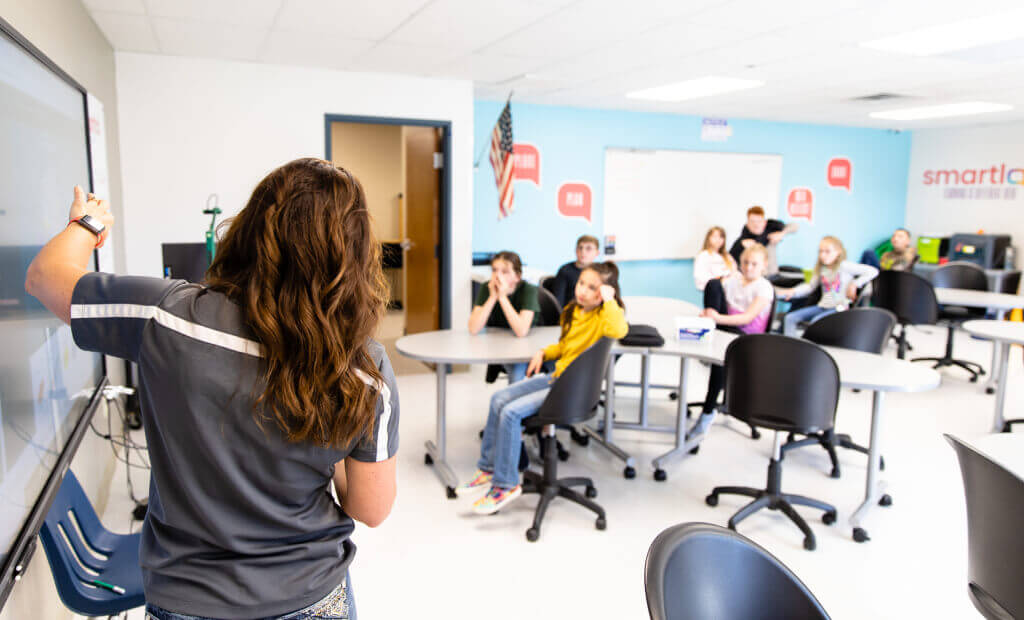
Introducing students to AI through STEM education prepares them for emerging careers. It also helps them become more creative problem-solvers and responsible tech users. When AI is embedded into hands-on, collaborative STEM learning, it moves from being an abstract concept to a powerful tool students can apply in meaningful ways.
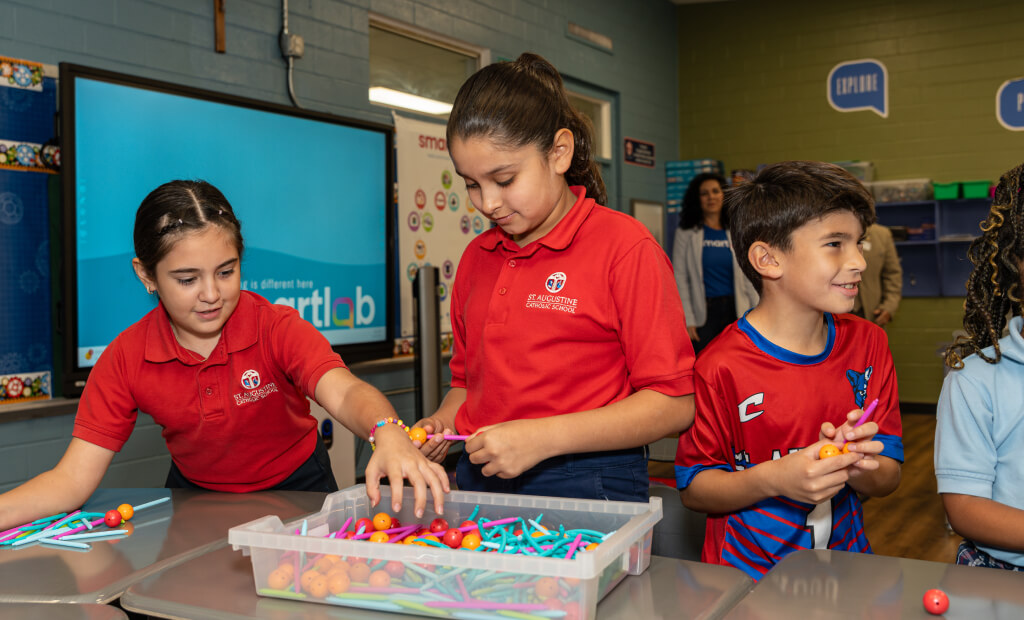
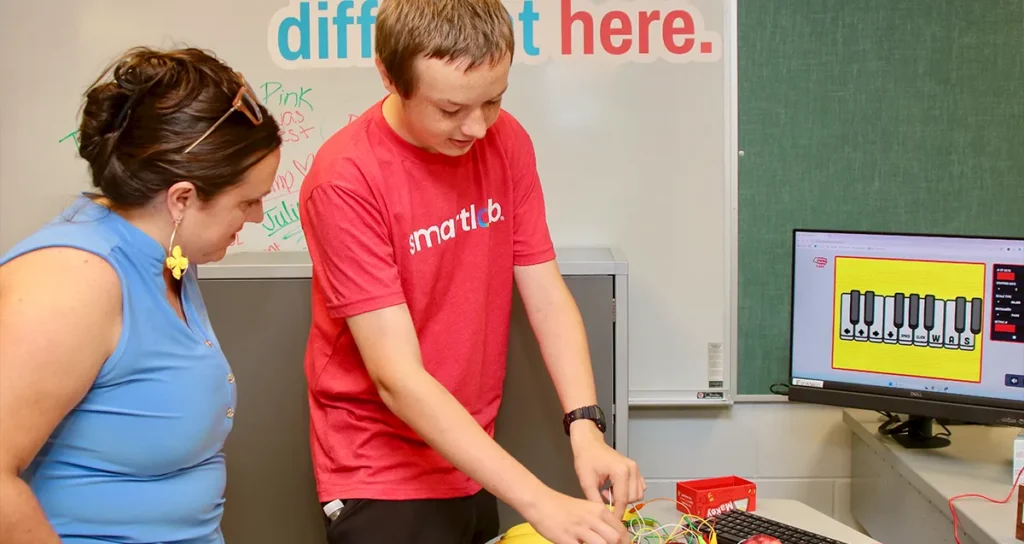
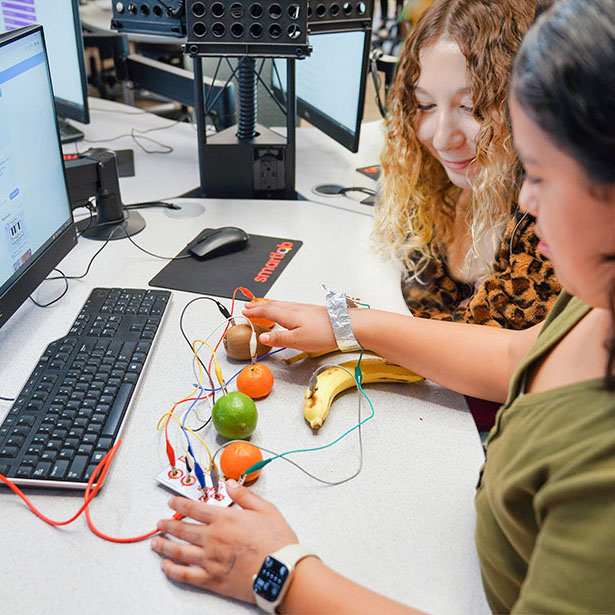
Integrated learning environments like SmartLab make this possible by combining real-world technology with project-based learning. As students engage with robotics, data science, or AI-driven tools, they also build the competencies needed to thrive in a tech-centric world.
Want to see what the future of learning looks like? Explore a SmartLab environment or schedule a visit to see how students can engage with AI through STEM in exciting, interactive ways.
 eBook
eBook
Funding STEM for the Long Term
Supporting Social-Emotional Learning Through an Integrated Approach
Addressing the social-emotional needs of students is no longer optional for schools. It is essential for schools to support SEL to reinforce academic achievement and prepare their students for the future.
Learn how SmartLab Learning provides a space, learning approach, and professional development to support schools in addressing the social-emotional needs of their students