What Does STEM Education Success Look Like? KPIs for Administrators & Superintendents
STEM labs play a critical role in preparing students for future challenges, but understanding whether those experiences are truly effective requires more than observation alone. As schools invest in hands-on, project-based STEM learning, it becomes essential to understand not just what is happening in the lab, but whether those experiences are being used consistently, implemented well, and sustained over time. This is where key performance indicators (KPIs) become essential.
KPIs give educators, administrators, and district leaders a clear, measurable way to evaluate the health and impact of STEM programs. When used intentionally, these metrics help schools move beyond isolated activities to strengthen instructional practices, improve student experiences, and support long-term, system-level STEM success across grade levels.
Here’s how.
What Are KPIs and Why Do They Matter?
In a broad sense, KPIs are measurable values that organizations use to assess progress toward defined goals. In K–12 STEM education, KPIs represent intentional, quantifiable (and often qualitative) indicators of program success. These indicators may reflect academic growth, student engagement, instructional consistency, or the quality of learning experiences over time.
Much like vital signs in healthcare, KPIs help administrators and superintendents understand whether a STEM program is healthy, improving, or in need of targeted support.
Evaluating STEM Education Programs: The Purpose of KPIs
For administrators and STEM educators, KPIs provide an evidence-based way to ask and answer important questions, including:
- Are students meeting academic and skill-based goals in STEM subjects?
- Are learning experiences fostering sustained interest and engagement in STEM?
- Are lab experiences and project-based learning aligned with broader instructional and program objectives?
By tracking KPIs over time, schools can move beyond anecdotal observations and make data-informed decisions about instructional design, resource allocation, and long-term program improvement.
The Importance of STEM Education Success Metrics
KPIs matter in STEM education because they provide clear benchmarks for setting goals and measuring progress. While this is valuable at the classroom level, it becomes even more critical at the district and system level, where K–12 outcomes are directly connected to workforce readiness and economic development.
National education and workforce initiatives emphasize accountability, talent pipeline development, and innovation as priorities for future growth. By adopting strong KPI frameworks in K–12 STEM programming, districts can ensure students are not only learning STEM content, but also developing the skills and readiness needed for future careers.
Common KPIs for Measuring K–12 STEM Lab Success
When evaluating the effectiveness of STEM labs and learning environments, it’s important to use KPIs that reflect both academic growth and the inquiry-driven, applied nature of STEM learning. Strong KPIs capture not just what students complete, but how they engage, persist, collaborate, and apply knowledge over time. The following indicators provide a balanced view of STEM program health and impact.
1. Student Engagement
- Why it matters: Engagement is one of the strongest early indicators of whether students feel connected to STEM learning. In hands-on environments, sustained engagement often reflects curiosity, confidence, and a developing STEM identity, all of which are key predictors of long-term participation in STEM pathways.
- How to measure it:
- Active participation in lab activities and problem-solving tasks
- Frequency and quality of student contributions such as questions, ideas, and iterations
- Student reflections or feedback on learning experiences
- Observable indicators including time on task and willingness to persist through challenge
- In Practice: Well-designed STEM experiences invite students to test ideas, revise solutions, and take ownership of outcomes. When students remain engaged through iteration and challenge, it signals deeper learning and motivation.
2. Learning Outcomes and Academic Performance
- Why it matters: The core purpose of STEM education is building transferable understanding across science, technology, engineering, and math. Learning outcomes indicate whether students are developing conceptual knowledge and applying it effectively in new contexts.
- How to measure it:
- Performance on assignments, projects, and assessments
- Growth over time on benchmarks or standardized measures
- Rubric-based evaluation of applied work and reasoning
- Evidence of concept transfer across units or disciplines
- In Practice: When students apply concepts to real-world scenarios, retention improves and assessment performance reflects understanding rather than memorization.
3. Project Completion Rate
- Why it matters: STEM learning often unfolds through multi-step challenges that require planning, iteration, and resilience. Project completion reflects not only content understanding, but also students’ ability to persist through complexity.
- How to measure it:
- Percentage of projects completed relative to those started
- Completion of multi-day or multi-week challenges
- Quality of final products based on shared criteria
- Patterns in where students pause or struggle during the process
- In Practice: A student’s ability to design, test, revise, and complete a project provides insight into both their STEM understanding and their problem-solving approach.
4. Collaboration and Teamwork
- Why it matters: Collaboration is foundational to STEM careers, where complex problems are solved through teamwork. STEM learning environments reflect this reality by emphasizing communication, shared responsibility, and collective problem-solving.
- How to measure it:
- Quality of group project outcomes
- Peer and self-assessments
- Teacher observations of collaboration behaviors
- Performance on structured team-based challenges
- In Practice: When students learn to listen, contribute, and adapt within teams, they build durable skills that extend well beyond the STEM lab.
5. Creativity and Innovation
- Why it matters: Creativity is central to STEM thinking. Innovative solutions demonstrate that students are synthesizing knowledge, experimenting with ideas, and moving beyond prescribed answers.
- How to measure it:
- Originality and diversity of student solutions
- Evidence of iteration and refinement
- Novel application of concepts
- Student reflections explaining design decisions
- In Practice: Design challenges that allow for multiple valid solutions highlight students’ ability to think creatively while grounding ideas in STEM principles.
Tools and Resources for Measuring Success in STEM Education
To measure STEM lab performance effectively, educators need tools and resources that support visibility into learning, progress, and student experience over time. The goal is not simply to collect data, but to make it easier to evaluate growth, reflect on instructional practices, and understand how students engage with STEM learning. The following tools can support meaningful measurement in K–12 STEM environments.
Digital Tools for K–12 Labs
Digital learning platforms help educators monitor progress, track assignments, and evaluate student work across time. When used intentionally, these platforms provide analytics that surface trends, highlight gaps, and inform instructional decisions. Common tools include:
STEM-focused digital platforms can also support measurement by capturing evidence of student thinking, iteration, and skill development across design, coding, and problem-solving activities. Examples include:
These tools are most effective when paired with clear learning goals and rubrics that define what success looks like beyond task completion.
Surveys and Feedback
Surveys provide valuable insight into students’ perceptions, confidence, and sense of belonging in STEM learning. These indicators often surface dimensions of success that are not visible through grades or assessments alone.
Surveys can be used to gather insight on:
- Interest and enthusiasm for STEM activities
- Perceived understanding of STEM concepts
- Classroom climate and collaboration experiences
- Thoughts on project challenges and successes
- Growth in confidence, persistence, and problem-solving
Surveys are especially useful when administered after major projects, at midpoints during the year to track engagement trends, or at the end of the year to evaluate overall program impact.
Rubrics for Assessment
Rubrics provide consistent criteria for evaluating both academic understanding and process-based skills. They help educators assess not only what students produce, but how they approach problem-solving, collaboration, and iteration.
Useful rubric types include:
- Individual performance rubrics, such as:
- Quizzes and assessments that measure comprehension and application
- Lab reports that assess clarity, analysis, and interpretation
- Coding or design work that evaluates logic, functionality, and reasoning
- Group collaboration rubrics that measure:
- Communication and teamwork
- Shared responsibility and role contribution
- Group decision-making and conflict resolution
- Quality and completeness of final outcomes
When used consistently, rubrics enable comparable data collection across classrooms, grade levels, and schools, supporting program-level evaluation and long-term accountability.
Hands-On Resources
Hands-on learning experiences support applied STEM learning by creating opportunities for students to demonstrate understanding through design, testing, and iteration. From a measurement perspective, these experiences generate observable evidence of learning when aligned to clear outcomes and assessment criteria.
Hands-on learning experiences support measurement by:
- Producing tangible artifacts and milestones that can be evaluated for quality and growth
- Allowing educators to observe problem-solving behaviors, collaboration, and persistence
- Creating opportunities to capture evidence of learning through reflections, revisions, and demonstrations
The value of hands-on resources lies not in the materials themselves, but in how they are integrated into coherent learning experiences with clear expectations and meaningful assessment.
How to Implement KPIs for STEM Education in the Classroom
When implemented intentionally, KPIs give educators and administrators actionable insight into how STEM learning is functioning in practice. Rather than serving as a compliance exercise, KPIs help schools refine instruction, improve student experiences, and continuously strengthen STEM labs over time. The following steps outline how to begin measuring success and identifying opportunities for improvement.
Set Clear Learning Objectives
Before selecting KPIs, clearly define what you want students to learn and achieve. Objectives should be specific, measurable, and aligned with district, state, or national STEM standards. When objectives are well defined, KPIs naturally follow and become easier to track consistently.
Clear learning objectives for your STEM lab could include:
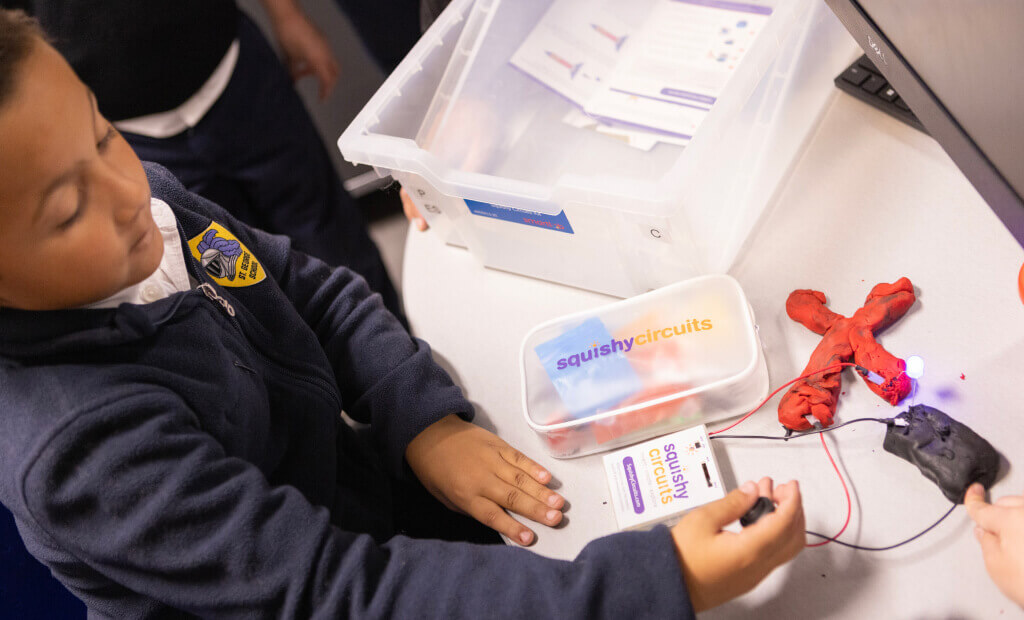
- Students will demonstrate understanding of electrical circuits by assembling a functional prototype
- Students will collaborate effectively in teams to complete a multi-step design or engineering challenge
- Students will apply the engineering design process to solve a real-world challenge
Prioritize Data Collection and Analysis
Once KPIs are established, schools should prioritize collecting data that reflects both academic progress and student experience. Using a combination of qualitative and quantitative data sources creates a more complete picture of how STEM learning is functioning across classrooms and grade levels.
Common data sources include assessments, digital learning platform analytics, surveys, and classroom observations. Together, these inputs allow educators to evaluate learning outcomes, engagement, and instructional effectiveness.
To analyze KPI data effectively, schools can:
- Look for patterns across classrooms, grade levels, or student groups
- Compare results over time to measure growth
- Identify areas where students routinely struggle (then adjust instruction accordingly)
- Share insights across teaching teams to refine lab design, resources, and facilitation strategies
Over time, this approach helps schools move from isolated data points to informed, system-level decision-making.
Monitor Student Progress
In STEM learning, skill development is cumulative. Concepts build over time, and early experiences directly influence students’ ability to tackle more complex challenges later. For that reason, monitoring student progress is essential for understanding whether learners are steadily moving toward deeper comprehension and skill mastery.
Schools can track long-term progress by:
- Using digital portfolios where students upload lab reports, prototypes, reflections, and revisions
- Tracking project completion rates or skill acquisition across multiple units
- Conducting mid-year and end-of-year assessments to measure competency growth
- Holding student conferences to discuss progress, goals, and improvement areas
When progress monitoring is intentional and ongoing, educators gain insight not just into what students completed, but how their thinking, confidence, and problem-solving abilities are developing.
Adapting KPIs for Different K–12 Grade Levels
To truly be effective, STEM KPIs must evolve as students progress through school. Each grade band brings different developmental needs, learning expectations, and instructional goals. Strong KPI frameworks account for this progression by aligning metrics to age-appropriate skills and depth of learning.
Elementary School (K–5)
At the elementary level, STEM education focuses on sparking curiosity, building confidence, and developing foundational skills. KPIs at this stage should emphasize exploration and early understanding, including:
- Engagement in hands-on activities
- Basic understanding of early STEM concepts (e.g. simple machines or rudimentary coding)
- Participation in maker activities and guided challenges
- Early communication skills, such as explaining observations or describing how something works
Middle School (6–8)
In middle school, students begin applying STEM concepts through more structured and sustained projects. KPIs should reflect growing independence and analytical thinking, such as:
- Critical thinking and the ability to troubleshoot problems
- Teamwork during group projects and lab challenges
- Problem-solving skills in multi-step inquiry-driven projects
- Growing technical proficiency with tools such as robotics kits or 3D design software
High School (9–12)
At the high school level, STEM labs increasingly prepare students for postsecondary education and career pathways. KPIs should focus on advanced application and readiness, including:
- Application of complex STEM concepts in real-world or industry-connected projects
- Completion and quality of multi-week or capstone projects
- Evidence of collaborative innovation and original design work
- Readiness for postsecondary STEM (e.g., coding skills, data analysis, engineering design process)
Best Practices for Evaluating K–12 STEM Lab Success
To accurately assess STEM lab success, schools need to look beyond isolated performance metrics and understand how students engage with STEM content, apply their learning, and grow over time. Incorporating proven evaluation practices helps ensure that KPIs are meaningful, actionable, and aligned with long-term program goals.
Use Mixed Methods
A strong evaluation strategy combines quantitative data with qualitative feedback. Mixed methods provide a more complete picture of how well STEM labs are meeting instructional objectives and where improvements may be needed. Test scores, project completion data, and platform analytics are strengthened when paired with observations, reflections, and student feedback.
Focus on Student Growth
While KPIs should measure immediate results, they are most valuable when they also show how students develop over time. Growth indicators may include stronger problem-solving skills, increased creativity, improved collaboration, or greater confidence in STEM subjects. Tracking progress across multiple units or grade levels helps districts understand the long-term impact of their programs
Collaborate With Teacher, Parents, and Administrators
Effective evaluation includes perspectives from across the learning community. Teachers provide insight into classroom implementation, parents can share observations about student interest and confidence at home, and administrators can identify school-wide trends. This shared approach ensures KPIs reflect both academic outcomes and the student experience.
Review and Adapt
STEM education is constantly evolving, and evaluation practices should evolve with it. Regularly reviewing KPI data enables educators to refine instructional strategies, adjust goals, and respond to changing student needs or district priorities. Continuous improvement helps ensure STEM labs remain relevant and aligned with emerging career pathways.
Ready to Improve Your STEM Program?
Measuring the success of STEM education programs requires an approach that goes beyond grades alone. By considering how students learn, collaborate, create, and grow, districts gain a deeper understanding of program effectiveness. Clear KPIs provide insight into engagement, academic progress, project completion, teamwork, and innovation across grade levels, while also revealing opportunities to strengthen instruction and outcomes.
When implemented and reviewed consistently, KPIs help districts make informed decisions, build more effective STEM programs, and create learning environments where all students can thrive. As schools plan to expand or sustain their STEM initiatives, knowing what to measure is just as important as knowing how to fund those efforts.
For administrators looking to take the next step, our comprehensive funding guide outlines long-term strategies for securing and sustaining STEM investments. Download your copy today to support strategic planning and lasting impact.