Promoting STEM Education through Architecture: 5 Engaging Activities for Students
From blueprints to building codes, architecture naturally weaves together math, science, engineering, and technology principles. When students engage in architectural thinking, they experience STEM in tangible, meaningful ways through structures they can see, touch, analyze, and create. Architectural challenges strengthen spatial reasoning, problem-solving, creativity, and applied learning, all of which are foundational skills in modern STEM education.
Hands-on architectural learning encourages students to apply scientific and mathematical principles creatively and purposefully. These experiences also build communication, collaboration, systems thinking, research, modeling, computational thinking, and digital literacy, aligning with a comprehensive STEM learning framework. Architecture offers educators a powerful way to spark curiosity and help students strengthen the knowledge, mindsets, and skills needed for success in school, work, and life.
Is Architecture Considered STEM? How It Fits Into a STEM Education
In conversations surrounding STEM, architecture is typically an application that gets overlooked in favor of subjects like coding, robotics, or chemistry. Yet architecture requires an understanding of scientific principles, technological tools, engineering methods, and mathematical concepts to design the spaces in which we live, work, and learn.
At its core, architecture is applied problem-solving grounded in scientific and engineering principles. Architects must have a firm grasp of physics to ensure a building can stand, utilize cutting-edge design software to model structures, apply engineering knowledge to system integration, and rely on precise calculations throughout the design and construction process. These connections make architecture a natural fit within the STEM field.
In 2018, Congress made it official, recognizing architecture as part of STEM through the passage of the Strengthening Career and Technical Education for the 21st Century Act. This recognition acknowledges the essential role that architecture plays in interdisciplinary learning and in preparing students for real-world challenges that require both creativity and technical skill to solve.
For educators, architecture presents an opportunity to engage students with hands-on learning experiences that connect abstract STEM concepts to tangible outcomes. Recognizing architecture as STEM helps learners understand how design choices influence communities, sustainability, safety, and innovation across many career pathways.
Benefits of Using Architecture as a STEM Teaching Tool
Incorporating architecture into STEM education plans benefits learners by:
- Promoting interdisciplinary learning: Architecture naturally blends science, technology, engineering, and mathematical concepts, allowing students to see how these subjects work together in real-world applications. It also pulls in additional STEM skill areas such as data literacy, digital citizenship, AI awareness, research, and systems thinking.
- Encouraging creative problem-solving: Designing structures requires students to think creatively, examine constraints, analyze user needs, and make informed trade-offs that mirror real-world STEM challenges. Students learn to justify choices, revise ideas, and balance competing priorities. This comprehensive, dynamic experience mirrors the types of challenges STEM professionals face every day.
- Enhancing spatial and visual thinking skills: Working with floor plans, models, and 3D concepts helps strengthen spatial reasoning, an ability that is also critical for subjects like geometry, engineering, and computer science. These abilities support many STEM applications including modeling and design, engineering, robotics, and computer science.
- Fostering collaboration and communication: Architectural design exercises are highly collaborative. Students share ideas, critique solutions, present their thinking, and work through complex challenges as a team. These skills are central to careers in STEM.
- Offering hands-on learning opportunities: From building models to sketching designs, architecture activities engage students in tactile, project-based learning that makes the principles of STEM more accessible and memorable. Hands-on design also supports iteration, testing, and refinement, which are core components of engineering and scientific thinking.
- Connecting STEM to the real world: Architecture helps students see how STEM shapes daily life. They learn how buildings stand, how cities grow, how sustainability affects design decisions, and how structural and environmental choices impact the people who use a space.
Tools That Keep Learners Engaged
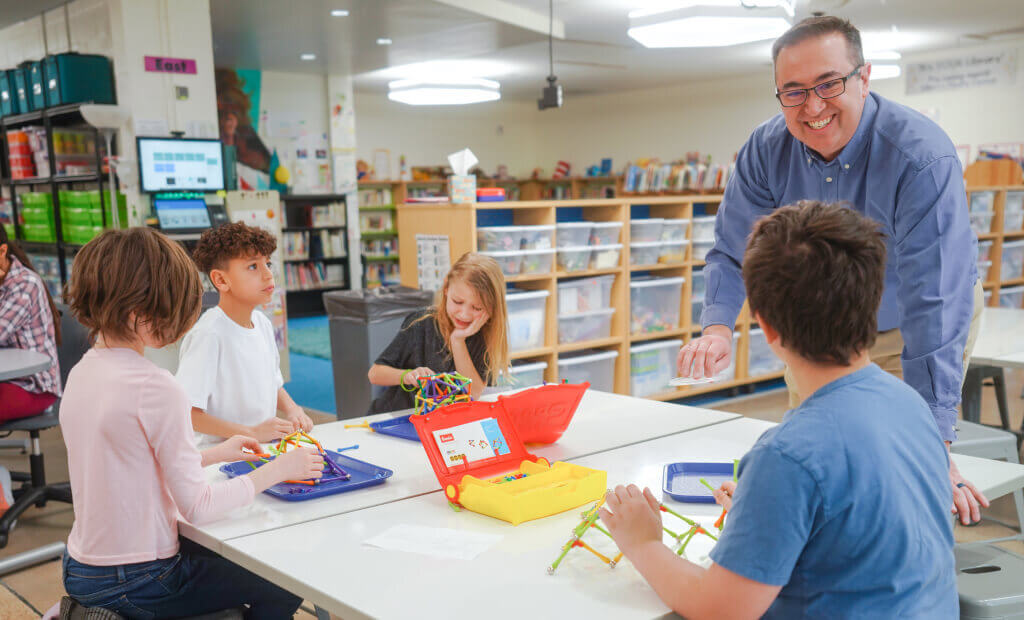
Hands-on design and modeling experiences spark curiosity and deepen understanding in architecture and STEM. The power of these experiences comes from how students think, design, test, analyze, and refine their ideas. Architectural learning helps students practice modeling and design, systems thinking, spatial reasoning, data analysis, problem-solving, and communication.
In SmartLab learning experiences, students engage in real-world design challenges that help them apply STEM concepts with purpose. The examples below illustrate the types of architectural thinking students develop as they work through meaningful, hands-on learning tasks.
Exploring Structure and Stability
Students investigate how buildings stand, how loads move through a structure, and how materials respond to force. They build and test models to understand balance, compression, tension, stability, and the trade-offs that influence design. These activities strengthen mechanics and structures, data literacy, and systems thinking.
Designing Homes and Spaces That Meet Community Needs
Students consider the needs of specific users or communities. They research priorities, analyze constraints, and develop concept sketches or digital models of homes, public spaces, or community developments. This work connects modeling and design, communication, ethics, and collaboration to career pathways such as construction, business, health sciences, and urban design.
Applying Digital Modeling and Technical Drawing
Students draft floor plans, create scaled representations, and visualize spatial relationships using both 2D and 3D modeling approaches. They learn to communicate design intent with clarity and precision. These activities strengthen digital literacy, information technology skills, computational thinking, geometry, measurement, and communication.
Investigating Sustainable and Energy Efficient Design
Students explore sustainability through design choices related to natural lighting, airflow, insulation, shading, and renewable energy. They collect data, evaluate performance, and refine their designs based on environmental considerations. These experiences cultivate systems thinking, data analysis, ethics, and environmental awareness across energy, agriculture, construction, and logistics pathways.
Designing for Users With Specific Needs
Students engage in human-centered design by creating spaces or products that support accessibility, sensory needs, or mobility limitations. They analyze user feedback, prototype solutions, and revise solutions based on outcomes. These experiences reinforce communication, empathy, iteration, and connections to health sciences and education pathways.
5 Activities That Improve STEM Skills
Architecture-based STEM activities help students build essential academic abilities and the broader skill set needed for future STEM careers. These activities strengthen problem-solving, critical thinking, design, communication, collaboration, and real-world application of STEM concepts. By sketching floor plans, building physical models, or working with digital design software, students strengthen key abilities they’ll rely on long-term. Abilities like:
1. Problem-Solving
Architectural design challenges require students to analyze requirements, consider constraints, and generate solutions that are both functional and meaningful. Whether developing an energy-efficient home or designing a structure that supports significant weight, students learn to balance competing factors such as sustainability, usability, safety, and aesthetics. These tasks mirror real-world architectural and engineering work, strengthening systems thinking, modeling and design, and iterative problem-solving.
Asking students to design and build a sustainable home that maximizes natural light while minimizing energy use encourages them to balance competing factors such as insulation, window placement, and material selection. This type of activity mirrors real-world architectural challenges, requiring learners to think as professionals do.
2. Critical Thinking
Architectural challenges require students to test ideas, evaluate outcomes, and revise their work based on evidence. When a design fails or a model needs improvement, learners analyze why, consider alternative solutions, and refine their approach. This iterative process builds reflective thinking, persistence, and the ability to make informed, data-driven decisions.
For example, building a structure from balsa wood, cardboard, or recycled materials introduces opportunities to test and refine designs. If a model collapses under weight, students must evaluate why, revise their approach, and try again. Iterative processes like this can help develop critical thinking skills and reflective problem-solving.
3. Application of Engineering Principles
Architecture gives students an authentic way to explore engineering principles such as force, load distribution, structural integrity, balance, and material behavior. By designing, constructing, and testing their models, learners see how tension, compression, and stability influence performance. These experiences deepen understanding of mechanics and structures while connecting engineering concepts to real-world applications.
To drive these concepts home, students can work with materials to build bridges or towers, then test how much weight their designs can hold. Watching structures bend, break, or stand strong helps them connect abstract concepts, such as tension and compression, to real outcomes.
4. Math and Geometry Skills
Architectural thinking naturally integrates mathematics through measurement, proportion, angles, symmetry, and scale. Students apply these concepts while drafting plans, calculating area, or creating scaled representations of buildings or interior spaces. Math becomes a powerful design tool, helping students ensure accuracy, communicate ideas clearly, and bring their architectural concepts to life.
Drafting a scaled floor plan, for instance, requires students to calculate square footage, convert measurements, and apply geometric principles to ensure accuracy. This exercise turns math into a design tool, making the subject matter more engaging and memorable.
5. Technological Fluency
Modern architectural work relies on digital tools that support visualization, modeling, and communication. Students use digital environments to explore designs, adjust scale and layout, and present their ideas effectively. These experiences build technological confidence and support information technology, computational thinking, and communication and multimedia skills.
For example, students can transform a hand-drawn sketch into a 3D digital model, experimenting with adjustments in scale and layout. This process demonstrates how digital tools can be used to bring ideas to life.
Applications for Architecture in STEM Fields
Exploring architectural concepts helps students understand how STEM skills apply to real-world challenges that shape the communities where people live, work, and learn. Architecture connects directly to all eight Integrated STEM Applications. It also touches on several career and industry pathways, from construction and architecture to transportation, business, entertainment, agriculture, energy, advanced manufacturing, education, and health sciences. Architectural learning invites students to examine how ideas become spaces, systems, and environments that improve quality of life.
Some of the applications for architecture in STEM include:
Urban Planning and Sustainable Design
Urban planning integrates environmental science, engineering, mathematics, and design to create safe, sustainable, and functional communities. Students explore how decisions about transportation, housing, energy, water management, green spaces, and population data influence community well-being. These experiences strengthen systems thinking, environmental awareness, and data literacy, helping students understand how thoughtful architectural choices support both people and the planet.
Technology and Smart Buildings
Smart buildings use sensors, automation systems, and digital technologies to control lighting, temperature, security, and energy use. Students investigate how data, circuitry, coding, and artificial intelligence work together to make buildings responsive and efficient. This field helps learners understand the connections among engineering, information technology, environmental science, and user-centered design, illustrating how technology enhances the built environment.
Structural and Architectural Engineering
Structural and architectural engineers ensure that buildings are strong, safe, and able to withstand environmental forces such as gravity, wind, and earthquakes. Students explore concepts such as load paths, material properties, structural integrity, and integrated systems including electrical, HVAC, plumbing, and acoustics. These experiences deepen understanding of physics, geometry, and engineering principles while showing how design and science come together to support human needs.
Digital Design and Simulation
Digital design and simulation tools allow architects and engineers to visualize spaces, test ideas, and identify potential challenges before construction begins. Students use digital modeling to explore scale, layout, lighting, structure, and material choices. These activities strengthen modeling and design, information technology, communication and multimedia, and computational thinking by giving learners a platform to test their ideas and communicate design intent effectively.
How Architecture-Based Activities Prepare Students for Careers in STEM
Architecture-based learning helps students build the mindset and skill set needed for success across a wide range of STEM careers. Through design challenges, students learn to think like both designers and engineers as they analyze problems, gather information, test solutions, and refine their ideas. They develop strong communication skills by presenting concepts clearly and supporting their thinking with evidence. Students also build technological fluency, persistence, creativity, and the ability to collaborate effectively with peers. These experiences help learners see themselves as capable problem-solvers and innovators, laying the foundation for future success in STEM pathways that shape the world.
Ready to explore how hands-on architectural challenges can strengthen STEM learning? Connect with our team to see how interactive, student-centered experiences help learners build confidence, creativity, and real-world skills. Book a SmartLab visit today and experience how interactive learning can build student confidence and success in STEM.