How STEM Mechanics and Structures Are Revolutionizing Architecture and Engineering
Architecture is a discipline rooted deeply in STEM thinking. From understanding the forces that keep a structure standing to using digital modeling tools that visualize complex ideas, the field integrates science, technology, engineering, and mathematics at every step. Architects use analytical reasoning, computational thinking, systems thinking, and mathematical concepts to solve challenges related to safety, function, aesthetics, and environmental performance.
Exploring the connection between architecture and STEM helps students see how engineering principles, problem-solving, modeling and design, and digital literacy influence the spaces where we live, learn, and work. It also shows how architectural thinking strengthens the real-world skills students need to become future-ready. When learners connect STEM concepts to the built environment, they experience firsthand how creativity, precision, and interdisciplinary thinking come together to shape the world around them.
Is Architecture Part of STEM? Understanding the Relationship
Although architecture is often associated with artistic expression, creativity is only one part of the profession. Designing safe, functional, and sustainable structures requires a foundation in physics, materials science, structural engineering, geometry, environmental systems, and digital technologies. Every decision an architect makes, from how weight moves through a beam to how sunlight enters a room, is grounded in scientific and mathematical reasoning.
These analytical demands are what firmly place architecture within STEM. Architecture students learn to calculate loads, model energy performance, evaluate materials, and apply engineering principles while also thinking critically about form and function. In the workplace, architects collaborate with engineers, urban planners, data analysts, and technologists, making the field a natural fit for interdisciplinary problem-solving.
For students, this connection shows that architecture is not only a creative discipline but also a powerful gateway into STEM thinking, STEM careers, and real-world applications across many industries.
The Role of Engineering in Architecture
Engineering is central to architecture because it transforms a design concept into a finished building that can stand safely, function efficiently, and support human needs. Beneath every floor plan and facade is a network of engineering principles that determine how loads move through the structure, how systems operate, and how materials behave over time.
Engineering strengthens architectural design through several key areas:
- Structural engineering focuses on how forces such as gravity, wind, and seismic activity affect a building and how to design systems that resist or redirect those forces.
- Materials science helps architects evaluate the properties of materials, including strength, durability, sustainability, and thermal performance.
- Sustainable engineering supports decisions related to energy efficiency, environmental impact, renewable materials, and green design strategies.
- Mechanical, electrical, and plumbing systems ensure that critical infrastructure such as HVAC, water supply, lighting, and electrical pathways are integrated safely and efficiently.
- Geotechnical engineering analyzes soil conditions and subsurface characteristics to determine the best foundation approach and ensure long-term stability.
Learning environments that emphasize real-world problem-solving often introduce students to these principles through interdisciplinary STEM challenges. As students model structures, analyze forces, evaluate materials, or design for energy performance, they begin to understand how engineering methods guide decisions in the built world. This helps them see architecture not only as art but as a deeply technical field rooted in analysis, design thinking, and real-world constraints.
How Design Thinking Drives Innovation in Architecture
Design thinking is a powerful process that helps architects merge creativity with technical precision. Through cycles of empathizing, defining, ideating, prototyping, and testing, architects refine ideas and develop solutions that balance form, function, and usability.
In architecture, design thinking supports innovation by:
- Connecting creativity with constraints. Safety codes, engineering requirements, site limitations, and budget considerations all become design opportunities rather than barriers.
- Centering user needs. Decisions about spatial layout, daylighting, accessibility, and flow begin with an understanding of how people experience a space.
- Encouraging interdisciplinary collaboration. Architects work closely with engineers, interior designers, construction teams, and environmental specialists to ensure that every design choice supports performance and user experience.
- Promoting rapid iteration. Through sketches, models, digital walkthroughs, and simulations, architects test ideas and refine them long before construction begins.
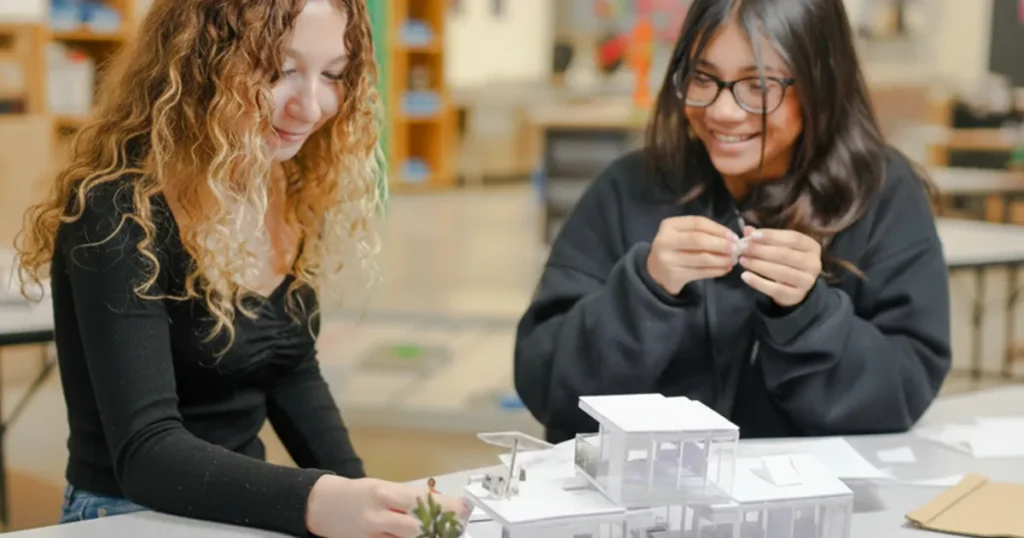
STEM learning environments frequently incorporate design thinking to help students prototype, test, and iterate on architectural ideas. When learners experiment with modeling tools, create scaled structures, or analyze how a design responds to constraints, they practice the same iterative processes used by professional architects and engineers. This strengthens skills in creativity, systems thinking, communication, and problem-solving, all essential for future-ready learners.
Architecture as a Gateway to Engineering Careers
Architecture sits at the intersection of creativity, engineering, and problem-solving, which makes it a powerful entry point into a wide range of STEM and engineering careers. The skills developed through architectural thinking overlap closely with disciplines such as civil engineering, environmental engineering, structural engineering, building technology, and advanced construction.
Many learners discover that architectural challenges ignite interests that naturally lead into engineering pathways. For example, sustainable design requires understanding energy systems, materials performance, and environmental impact. Building technology roles blend engineering principles with emerging innovations that support safety, comfort, accessibility, and climate resilience. Other learners develop interests in areas such as transportation systems, urban planning, or infrastructure design, all of which rely heavily on engineering concepts.
Learning environments that incorporate architectural design help students practice the same analytical and creative processes used by engineering professionals. They may evaluate site limitations, explore how loads move through structures, design with sustainability in mind, analyze spatial flow, or model for performance. These experiences allow students to bridge design vision with engineering execution, giving them confidence to explore STEM careers where creativity and technical thinking work together.
As cities, industries, and communities face challenges related to climate adaptation, rapid urbanization, and evolving building codes, professionals who can combine architectural insight with engineering expertise are increasingly in demand. Experiences that introduce students to architecture early help them see how these pathways connect and how their STEM skills can shape the world around them.

STEM Skills Required for a Career in Architecture
Success in architecture requires a combination of creativity, technical reasoning, and strong STEM foundations. Mathematics, technology, engineering concepts, and scientific understanding all play an essential role in the design and analysis of the built environment.
Key STEM skills that support architectural careers include:
- Mathematical reasoning: Geometry, algebra, measurement, scale, angles, and proportion help architects calculate dimensions, analyze spatial relationships, and ensure structural and functional accuracy.
- Physics and systems thinking: Understanding forces, loads, materials, and energy helps architects design buildings that respond to environmental conditions, resist stress, and support long-term performance.
- Modeling and design: Digital tools and conceptual models allow architects to explore ideas, test assumptions, simulate performance, and refine designs based on evidence.
- Computational thinking: Breaking down complex design challenges into smaller, solvable components supports iterative problem-solving and improves design decision-making.
- Data literacy: Architects use data to analyze energy performance, evaluate materials, and understand how design decisions affect building systems and user experience.
- Communication and collaboration: Architects regularly share ideas with engineers, clients, and construction teams, making clear communication essential for aligning design choices with project requirements.
- Creative problem-solving: Balancing aesthetics, safety, sustainability, cost, and user needs requires a flexible and imaginative approach to constraints.
In many STEM programs, students practice these skills through interdisciplinary challenges that mirror real architectural work. They may draft scaled plans, analyze forces, explore energy efficiency, simulate design choices, or create physical and digital models. These experiences help learners understand how STEM skills support creativity and prepare them for careers where they can design solutions that have real impact.
Bringing Architecture and Engineering to Life
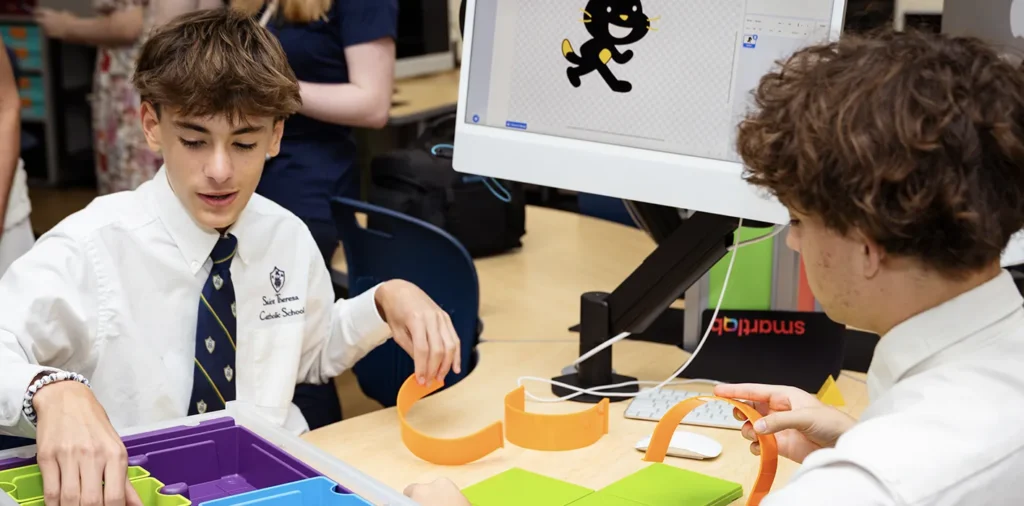
For students to truly understand how STEM mechanics support architectural innovation, they need learning environments that encourage project-based learning, hands-on exploration, systems thinking, and interdisciplinary problem-solving. When learners have opportunities to design, test, model, analyze, and iterate, they begin to see how decisions in architecture and engineering are connected to physics, mathematics, environmental systems, materials science, and human-centered design.
Experiences like these are strengthened in programs that emphasize the SmartLab Learning Framework. Students build skills in communication, collaboration, data literacy, research, design, computational thinking, systems thinking, and lifelong learning while working on authentic challenges that mirror the work of architects and engineers. Through this process, they learn to ask better questions, make evidence-based decisions, and refine ideas through iteration.
Integrated STEM applications come to life when students:
- Explore structures through mechanics and forces
- Model and visualize ideas using design processes
- Analyze environmental, material, or system data
- Apply circuitry and electronics to design smarter spaces
- Use information technology to communicate solutions
- Integrate artificial intelligence to optimize performance
- Combine robotics and control concepts in adaptive designs
- Use communication and multimedia tools to present plans
These experiences help students understand how architecture and engineering connect across multiple career and industry pathways. Learners begin to see themselves in fields such as construction and architecture, advanced manufacturing, transportation and logistics, entertainment and media, agriculture and energy, education and training, health sciences, and finance and entrepreneurship, all of which rely on innovative approaches to the built environment.
When students take ownership of design decisions, collaborate on solutions, and iterate with purpose, they develop the confidence and resilience needed for future-ready careers. Programs that provide structured guidance, authentic challenges, and ongoing support help students connect classroom learning with the real world and empower them to imagine what they can build next.
Bring Hands-On Learning Experiences Into Your Classroom
Architecture and engineering help students make sense of the world around them. When learners explore these disciplines through integrated STEM experiences, they build the problem-solving, modeling, communication, and analytical skills that prepare them for future-ready careers across many industries. They also begin to understand how creativity and technical thinking work together to shape the spaces and systems we depend on every day.
If you are looking to bring real-world design and engineering experiences to your students, our team can help you build a program that strengthens STEM skills, encourages hands-on exploration, and supports learners as they take on meaningful architectural and engineering challenges.
Ready to explore what this could look like for your school or district? Connect with us to continue the conversation.