The Future of Transportation and Logistics: How STEM Education, AI, & Robotics Are Driving Change
In an era when goods move faster and farther than ever before, the transportation and logistics industries are evolving rapidly to meet new global demands. This transformation is driven not only by new technologies, but by the ability to apply integrated STEM skills to complex, real-world systems.
STEM education brings science, math, engineering, and technology together through intentional, real-world problem solving rather than teaching these disciplines in isolation. Robotics, which combines mechanical systems, electronics, programming, and data, is a visible example of how integrated STEM applications enable automation, precision, and efficiency across modern supply chains.
As robotics and artificial intelligence become embedded across warehouse operations, transportation networks, and last-mile delivery, the demand for a workforce skilled in integrated STEM applications continues to grow. By connecting STEM learning to real-world logistics challenges, students are better prepared to understand how data, automation, engineering, and decision-making work together to shape the future of the industry.
How Robotics Is Shaping the Transportation and Logistics Industries
From self-driving delivery vehicles to automated warehouses that operate around the clock, robotics and artificial intelligence are reshaping how goods move through transportation and logistics systems. While these innovations may appear futuristic, they are already embedded in day-to-day operations across the industry. More importantly, they illustrate how integrated STEM applications work together to solve complex, real-world challenges. Here’s how:
Warehousing
In warehousing, robotics systems such as autonomous mobile robots (AMRs) support order picking, packing, and inventory management as part of larger, data-driven systems. These robots navigate warehouse environments using sensors, control systems, and real-time data to move goods between storage and packing stations. By combining mechanics, electronics, and data analysis, these systems reduce errors, improve efficiency, and support faster fulfillment in increasingly complex distribution networks.
Transportation
In transportation, AI-driven route optimization, sensor-based control systems, and semi-autonomous trucking technologies are improving delivery efficiency and reducing fuel consumption. Autonomous freight vehicles can support long-haul routes by using data and modeling to optimize speed, safety, and energy use, while human operators continue to oversee complex decision-making. In urban environments, delivery robots and drones demonstrate how robotics, communication systems, and data work together to address last-mile logistics challenges.
Supply Chain Management
In supply chain management, predictive analytics and automation help organizations anticipate demand, manage inventory, and respond to disruptions across global systems. Tools such as robotic process automation support tasks like shipment tracking, documentation, and data processing, allowing professionals to focus on higher-level analysis, planning, and continuous improvement. These decisions rely on systems thinking and an understanding of how global markets, regulations, and logistics constraints interact.
Across these applications, robotics and automation augment human capabilities rather than replacing them. The result is a transportation and logistics sector that is more adaptive, data-informed, and better equipped to respond to global challenges that require both technical expertise and human judgment.
The Role of STEM Education in Logistics and Transportation
As robotics, data, and automation reshape how goods are moved, stored, and delivered, the transportation and logistics industries increasingly rely on professionals who can think critically, solve complex problems, and make decisions within interconnected systems. STEM education builds these capabilities early by engaging students in integrated, real-world problem solving that combines engineering, technology, data, and systems thinking in ways that mirror modern industry challenges.
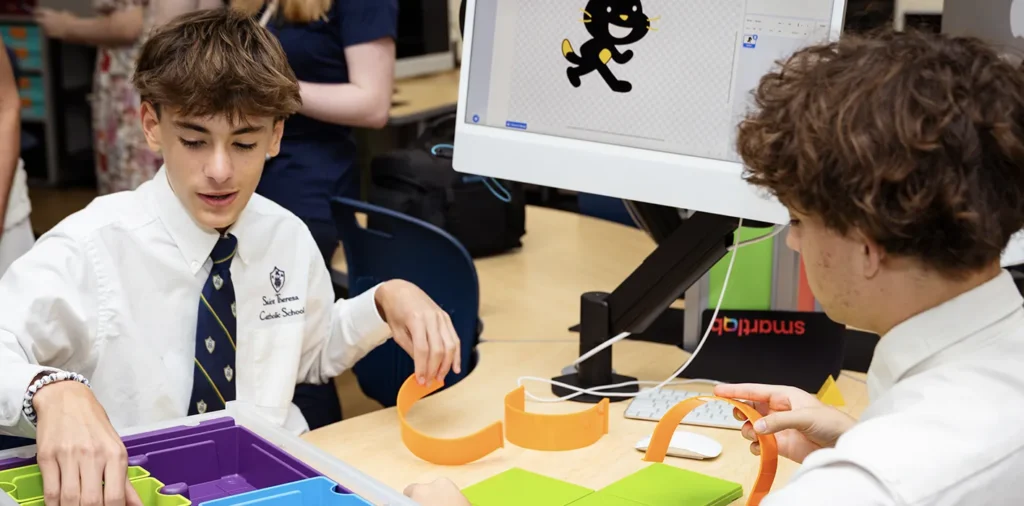
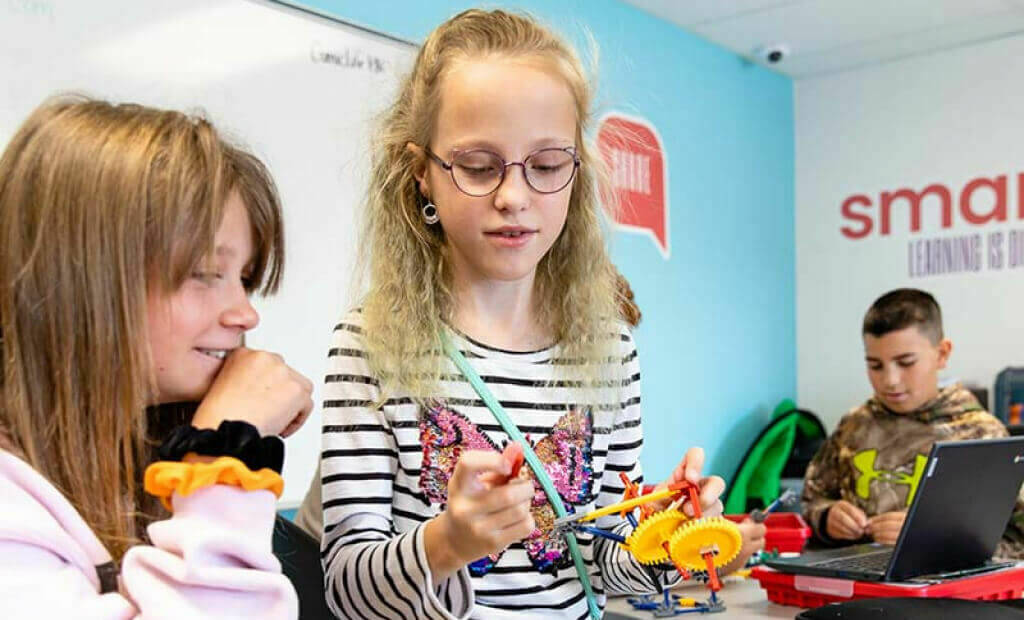
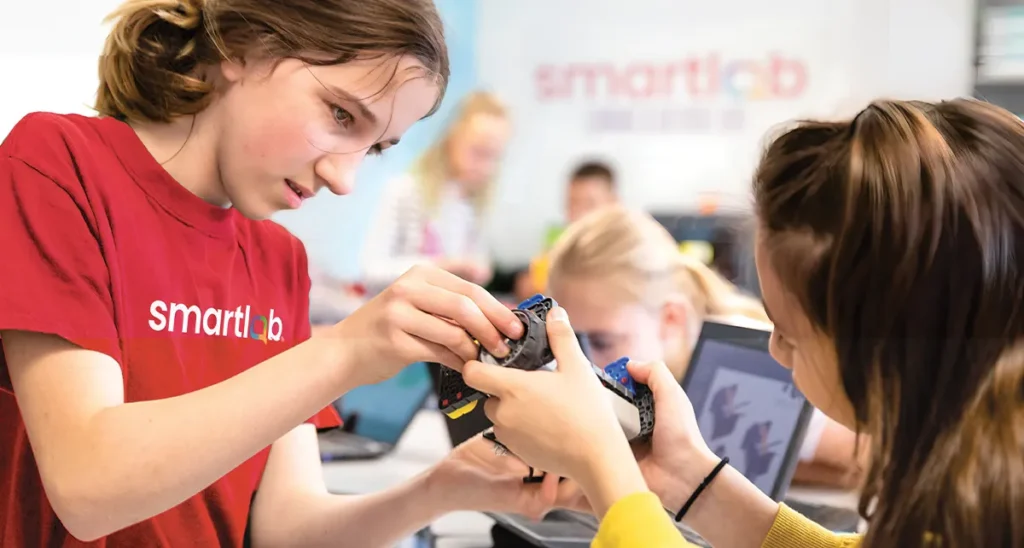
In applied, scenario-based learning environments, students engage in challenges that reflect the kinds of decisions transportation and logistics professionals face every day. Through intentional instructional design and guided facilitation, these experiences help students understand how STEM skills work together to adapt to change and improve complex systems over time..
Examples of SmartLAB learning experiences that connect integrated STEM skills to transportation and logistics challenges include:
All Aboard the Circuit Express
Grade level: Kindergarten
As communities expand and transportation systems grow, safety becomes a critical concern. Acting as signal engineers, learners design and test a railroad signaling system to ensure that cars, pedestrians, and trains move safely through shared spaces. Through this experience, students explore circuitry and electronics while learning how safety systems support reliable transportation networks.
Harvest Hauler
Grade level: Kindergarten
As demand for fresh food grows, logistics plays a critical role in connecting farms to communities. In this experience, learners take on the roles of engineers and problem solvers as they design and test a model self-driving delivery system. Students explore how robotics, routing, and planning work together to address real-world challenges related to access, efficiency, and distribution.
Autonomous Avenues
Grade level: 3
As transportation systems become more complex, safety and coordination are essential. In this experience, learners design and program autonomous vehicles to navigate a model community that includes roads, intersections, and pedestrian crossings. Through iterative testing and refinement, students explore robotics, control systems, and data-driven decision-making while balancing efficiency and safety.
The Future of Logistics and Transportation
Transportation and logistics are entering a period of rapid transformation driven by advances in automation, data analytics, artificial intelligence, and systems-level planning.
Autonomous vehicles are poised to play an expanding role in freight and delivery networks. Self-driving trucks may support long-haul routes under specific conditions, while autonomous delivery systems address last-mile challenges in dense urban environments. Increasingly, these systems will operate alongside human drivers and operators, blending human judgment with AI-supported efficiency.
AI-powered decision-making is also reshaping logistics strategy. Machine learning models support route optimization, demand forecasting, and warehouse management by analyzing large volumes of data in real time. Rather than replacing human oversight, these tools enhance decision-making by helping professionals respond more effectively to disruptions such as weather events, traffic congestion, or supply chain delays.
Advanced robotics continues to extend automation across warehouses, ports, and distribution centers. As robots take on more complex physical tasks, human workers increasingly focus on oversight, analysis, and system optimization. This shift underscores the growing importance of STEM skills that support adaptability, continuous learning, and systems thinking.
The future of transportation and logistics depends on the partnership between human expertise and machine intelligence. As supply chains become more adaptive and data-informed, success will depend on professionals who can learn continuously, understand interconnected systems, and apply STEM skills to evolving industry challenges.

STEM and Robotics at Work: Examples from the Logistics and Transportation Industries
Across the transportation and logistics industries, organizations are integrating robotics, artificial intelligence, data, and engineering into interconnected systems that improve efficiency, safety, and decision-making. These examples highlight how integrated STEM applications support real-world logistics challenges at scale.
Waabi
Area of expertise: Autonomous freight
Waabi is advancing autonomous freight through an AI-first approach that combines machine learning, simulation, and systems modeling. By training and validating autonomous trucking systems in virtual environments, Waabi demonstrates how data, modeling, and engineering work together to improve safety, efficiency, and adaptability before vehicles operate in real-world conditions.
Amazon Robotics
Area of expertise: Warehouse automation
Amazon uses large-scale robotics and automation systems across its fulfillment centers to support picking, packing, sorting, and inventory management. These systems integrate robotics, data analytics, and artificial intelligence to optimize workflows, reduce waste, and respond to changing demand, illustrating how logistics efficiency depends on coordinated STEM-driven systems rather than individual tools.
Ocado
Area of expertise: Grocery fulfillment
UK-based Ocado operates a highly automated grocery fulfillment system where robotics, control technology, and data systems work together to manage inventory and order fulfillment. Robots navigate a coordinated track network and handle complex tasks such as lifting irregular items, demonstrating how mechanics, electronics, and software integrate to support precision and scalability in logistics operations.
DHL & Boston Dynamics
Area of expertise: Container unloading
DHL has deployed robotics systems to support physically demanding warehouse tasks such as container unloading. These systems combine mechanical design, control systems, and sensing technology to improve efficiency while reducing physical strain on workers, highlighting how automation can enhance both operational performance and workplace safety.
Symbotic
Area of expertise: Smart warehouse automation
Symbotic provides AI-powered warehouse automation systems that integrate robotics, data analysis, and systems engineering to manage large-scale storage and retrieval operations. By using untethered robots and adaptive software, these systems illustrate how logistics operations rely on real-time data, modeling, and coordination to operate efficiently at scale.
Together, these examples show how transportation and logistics innovation depends on integrated STEM systems, where robotics, data, engineering, and human decision-making intersect to solve complex, real-world challenges.
Preparing Tomorrow’s Workforce
As automation, robotics, data, and artificial intelligence continue to reshape transportation and logistics, the industry’s future depends on a workforce equipped with integrated STEM skills and systems-level thinking. Building this talent pipeline requires more than early exposure to individual technologies. It means engaging students in intentional, hands-on learning experiences that connect classroom concepts to real-world logistics challenges and career pathways.
So how can educators begin building this kind of preparation? The following examples illustrate different ways students can engage in STEM learning experiences connected to transportation and logistics.
- SmartLab Learning Environments: Provide intentionally designed, project-based STEM experiences where students apply science, math, engineering, and technology together to solve real-world challenges connected to transportation and logistics. Through guided facilitation and iterative problem-solving, students build systems thinking, collaboration skills, and career awareness over time.
- FIRST Robotics Competition: Gives middle and high school students the chance to design, build, and program robots to complete complex tasks.
- SkillsUSA: Offers competitive events in robotics, automation technology, and transportation distribution and logistics, preparing students for technical careers.
- Robofest: Inspires interest in STEM and challenges students in grades 4–12 to solve problems through an international autonomous robotics competition.
By fostering creativity, critical thinking, and systems-based problem solving, educators can help students develop the skills needed to contribute to the future of transportation and logistics. When learning experiences are intentionally designed and connected to real-world industries, students are better prepared to see themselves as capable problem solvers and future professionals. Ready to take the next step? SmartLab can partner with schools to design learning environments that support sustained STEM growth and career readiness. Get in touch with our team to begin planning your SmartLab program today.