How STEM Education Fuels Entrepreneurship, Data Analysis, and Business Innovation
The 21st-century economy is built on science, technology, engineering, and mathematics. Even those of us who don’t work in information technology or science are increasingly asked to engage with STEM on some level.
Whether we’re asked to conduct research and analysis, help program applications or AI tools, work across disciplines to develop technical solutions, or even just employ critical thinking to solve problems, STEM is integral to every industry.
STEM literacy is essential for students because no matter their careers or which business they’re in, they’ll be expected to employ technical and collaborative skills. This article highlights how educators can provide a STEM education that will prepare today’s learners for future success.
How STEM Education Builds Essential Business Skills
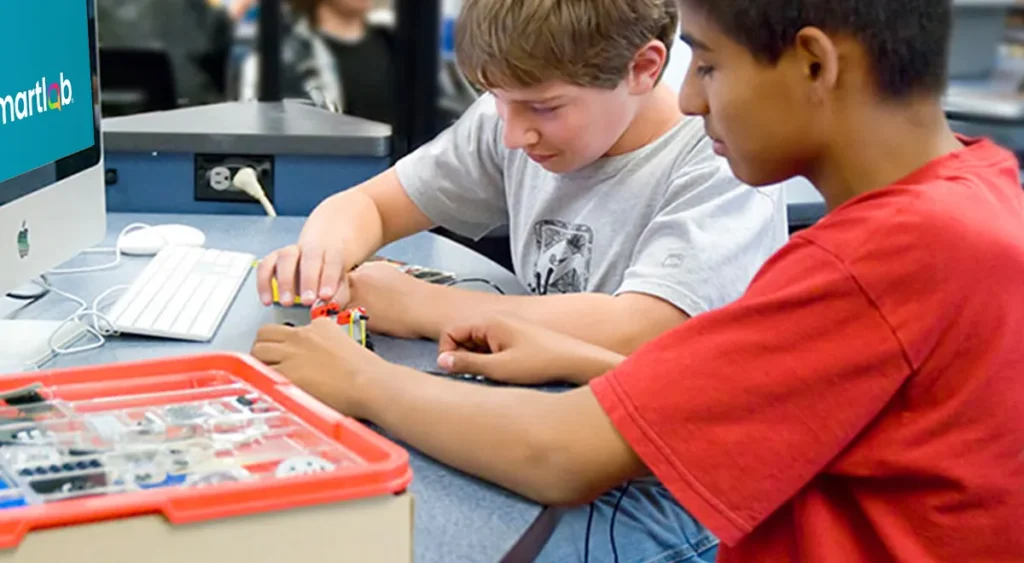
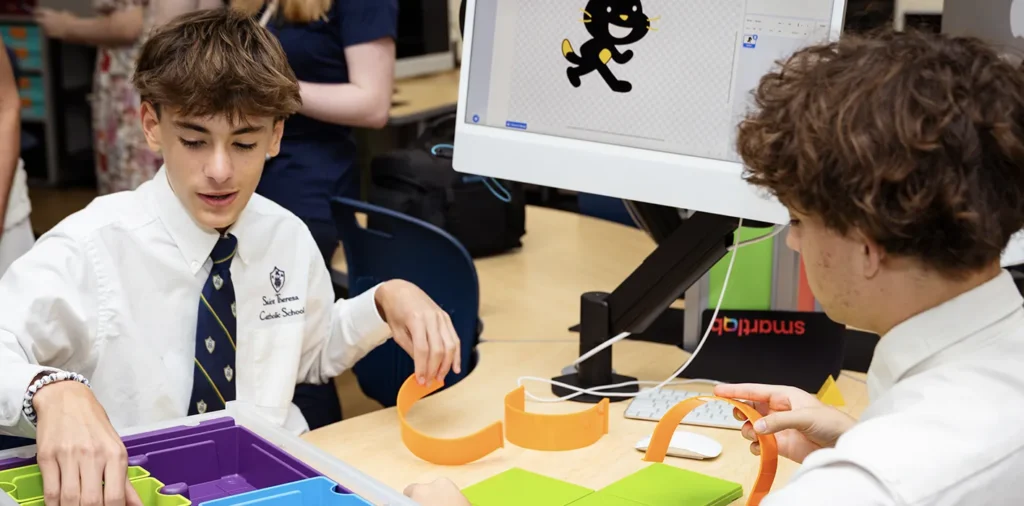
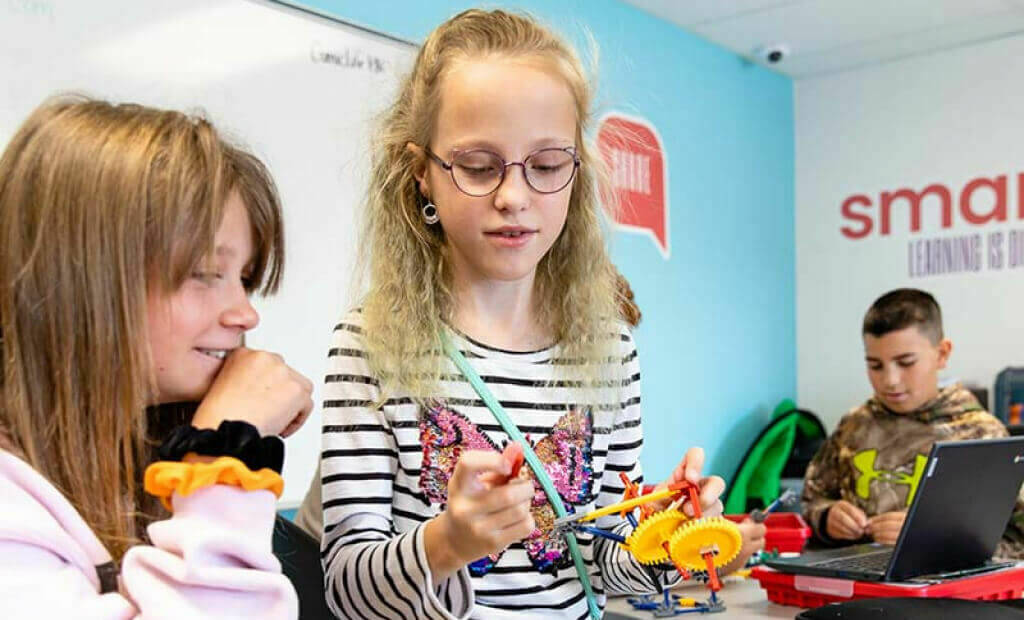
One of the reasons why STEM instruction works so well to build future skills is due to its experiential nature. Learners tasked with developing solutions through research, design, and experimentation will naturally build adaptability, technical literacy, and creative problem-solving over time.
You don’t need to have specific “business” classes to build important business skills. Asking learners to solve technical problems as early as elementary school gives students the mindset and technical abilities they’ll rely on later to drive smart decisions with data, launch a new product, or even start their own companies.
STEM education ties directly into key business areas
STEM prepares learners for success in business by introducing skills that are essential in many different careers, such as:
- Computer language coding
Learning to code helps learners understand how today’s technologies work, from mobile apps to automation tools. Familiarity with popular programming languages and experience designing programs empowers learners to create tech solutions, manage digital products, or lead tech-savvy teams. Even basic coding knowledge gives an edge in nearly every modern business. - Data collection and analysis
In business, data drives decisions. STEM trains learners how to collect, organize, and analyze data to uncover trends, make predictions, and measure outcomes. These skills are foundational for roles in marketing, operations, finance, and strategy. - Financial literacy
Running a successful business means being able to understand the numbers. Financial lessons fit well into different STEM projects, where you can ask learners to engage in budgeting, forecasting, and managing cash flow, which can get them comfortable using spreadsheets, financial models, and analytical tools. - Strategic thinking and persistence
STEM challenges you to test hypotheses, solve problems methodically, and refine solutions through trial and error. There are no “test answers” when running a business, and often no clear path forward. Learning how to think long-term and stick with tough challenges builds the resilience needed to grow a business. - Effective communication and collaboration
Many STEM projects require more than technical skills; success requires team-based problem-solving. Students learn to delegate tasks, listen to diverse perspectives, and communicate ideas clearly—all skills that directly translate to leading teams and working with customers or partners in a business setting. - Digital marketing and E-commerce
Today’s businesses operate in a digital-first world. STEM projects that work with digital platforms can instruct students how to navigate tools such as Google Analytics and e-commerce systems. Understanding how to use data to attract, convert, and retain customers is vital for anyone looking to market or sell products online.
STEM skills empower tomorrow’s entrepreneurs
STEM education and innovation are essential for entrepreneurs, who often have to create entirely new products or systems to launch their businesses. STEM is especially helpful for:
- Innovation and problem-solving
Entrepreneurs solve real-world problems. A project-based learning (PBL) approach to STEM projects helps to teach learners how to identify needs, prototype solutions, and refine them through testing. This hands-on experience nurtures creativity and an innovation-first mindset essential for launching successful ventures. - Leadership and management
STEM education often involves managing group projects and deadlines. Elementary students can learn the basics of project management, while older students can work directly with frameworks like Agile or Scrum to complete more complex projects. These organizational, time management, and leadership skills are directly applicable to managing teams and scaling businesses efficiently. - Technology and business integration
STEM teaches how different disciplines support one another. For example, learners may gain an understanding of how math helps model financial projections or how engineering supports product design. This integrated thinking is essential in entrepreneurship, where understanding how parts connect often leads to smarter solutions and stronger products. - Ethical business practice
STEM isn’t just about training learners to solve problems; it encourages them to solve the right ones. When STEM education includes social awareness, it builds empathy, ethics, and inclusivity—all critical values for aspiring entrepreneurs who want to create solutions that are socially responsible and sustainable. - Resilience and risk management
Failure is a learning opportunity. STEM fields normalize experimentation and teach learners how to assess risks, adapt quickly, and improve from feedback. This is core to the entrepreneurial mindset of testing often, learning fast, and continually moving forward.
10 Business Career Pathways Made Possible Through STEM Education
Any career can be a STEM career, but there are some positions in business and enterprises that benefit directly from STEM skills. If your students are interested in learning more about which future careers they can aspire to, start with this list:
Data Analyst
Data analysts collect, clean, and interpret large sets of data to uncover meaningful trends and insights that help businesses, governments, and charities make informed decisions. They often use tools to manage data and create dashboards that translate complex information into clear, actionable reports. With a strong foundation in math, statistics, and logical reasoning, data analysts play a crucial role in shaping business strategies.
Applicable STEM Skills
- Math: Employ statistical analysis, probability, and data modeling
- Technology: Make use of tools such as Python, R, Excel, SQL, and data visualization platforms
- Critical thinking: Analyze patterns and anomalies to solve business problems
Transportation Consultant
Every business relies on transportation and the global supply chain. A transportation consultant would offer services that help improve the efficiency, safety, and sustainability of transportation networks. They utilize STEM to analyze traffic patterns, model system performance, and recommend changes to logistics, infrastructure, or routing.
Applicable STEM Skills
- Math and data analysis: Use statistical models and simulation software to analyze transit systems or shipping routes.
- Engineering and technology: Apply systems engineering to optimize traffic flow or reduce fuel consumption.
- Computer science: Work with mapping technologies, real-time tracking systems, and logistics software to streamline operations.
Food Tech Entrepreneur
The food service industry has changed drastically since the pandemic lockdowns, with food delivery apps, pop-up kitchen experiences, and other innovations. A food tech entrepreneur is someone who develops innovative food products or services, such as sustainable packaging, meal delivery platforms, or allergy-free ingredients, combining culinary insights with science and technology.
Applicable STEM Skills
- Science and chemistry: Understanding food science is critical for formulating products, ensuring safety, and scaling recipes.
- Technology: Use software or apps for digital ordering, delivery logistics, or customer personalization.
- Engineering: Design equipment or systems to improve food preparation, packaging, or distribution processes.
Product Manager
Product managers lead the development of new products or features, guiding teams from initial concept through launch. They work closely with engineers, designers, and marketers to ensure products meet customer needs while remaining technically feasible and competitive. A background in STEM helps product managers understand the technical aspects of development and apply systems thinking to align business goals with user experience.
Applicable STEM Skills
- Engineering and technology: Understand software/hardware capabilities to scope product features
- Math and data analysis: Use metrics to evaluate product performance and customer behavior
- Science and systems thinking: Apply scientific methods to test assumptions and refine ideas
Industrial Automation Specialist
The manufacturing industry is seeing a massive transformation due to digital technology. An automation specialist is someone who aids modern manufacturers by designing, implementing, and maintaining automated AI systems that improve efficiency in factories and production lines. Their innovations would play a key role in reducing costs and increasing output.
Applicable STEM Skills
- Engineering and robotics: Use electrical and mechanical engineering to design and operate robotic systems.
- Programming and coding: Write code for machine learning systems, programmable logic controllers (PLCs), and sensor systems.
- Math and logic: Apply algorithms to streamline workflows, minimize errors, and boost performance.
Business Intelligence (BI) Specialist
BI specialists design and maintain the systems businesses use to track business performance and uncover insights. They create data pipelines, develop visual dashboards, and offer strategic recommendations based on real-time analytics. This role relies heavily on computer science and statistics skills to write scripts, analyze trends, and identify areas for operational improvement.
Applicable STEM Skills
- Math and computer science: Create algorithms, write scripts, and automate data pipelines
- Technology: Work with BI tools such as Power BI, Looker, or SAS
- Problem-solving: Use structured logic to identify inefficiencies or opportunities
Entrepreneur/Startup Founder
Entrepreneurs in the tech or STEM space identify problems and build innovative solutions, often launching startups that rely on technology or scientific insight. They may develop prototypes, pitch to investors, and lead teams in bringing a new product or service to market. A STEM background enables them to evaluate technical feasibility, manage product development, and make data-driven business decisions that guide early-stage growth and innovation.
Applicable STEM Skills
- Engineering and technology: Build a prototype or evaluate tech feasibility
- Math and analytics: Develop pricing strategies, forecast revenue, and manage finances
- Science and innovation: Apply research and experimentation to refine offerings
Agricultural Entrepreneur
Feeding more people while conserving resources and overcoming climate challenges will be a major priority in the coming years. Precision agricultural entrepreneurs can apply technology to improve crop yield, conserve resources, and modernize farming operations. They might develop or sell agtech solutions like drone imaging, soil sensors, or automated irrigation systems.
Applicable STEM Skills
- Environmental science and biology: Understand soil health, crop cycles, and climate impacts.
- Engineering: Build and use sensors, GPS, and drones to monitor field conditions and optimize inputs.
- Data analysis: Interpret yield data, forecast weather trends, and make data-driven farming decisions.
Operations Research Analyst
Operations research analysts use mathematical modeling, statistics, and computer programming to help organizations solve complex problems and improve efficiency. They analyze many different areas, including logistics, scheduling, and resource allocation in different industries to optimize performance and reduce costs.
Applicable STEM Skills
- Math and statistics: Utilize skills for modeling and simulations
- Computer science: Write programs and use modeling software
- Engineering and systems thinking: Solve real-world problems using logical frameworks
Digital Media Application Developer
A digital media application developer designs and builds interactive apps for content delivery, such as video streaming platforms, mobile games, or social media tools. They can design and develop new applications that provide useful services or offer the next big gaming experience. They either code the application themselves or work with others to code the front-end and back-end systems and integrate multimedia features such as audio, video, and animations.
Applicable STEM Skills
- Computer science and coding: Build responsive user interfaces, manage databases, and write code
- Math and logic: Create algorithms, timing controls, and data structures for smooth playback, user interaction, and scalability.
- Technology and software engineering: Understanding cloud platforms, content delivery networks (CDNs), and media file formats

Strategies to Leverage STEM and Business Skills in the Classroom
As fun as “design a new product” activities or “Shark Tank” style pitch projects can be, STEM business education doesn’t have to be explicit. Any lessons that ask learners to utilize relevant skills can boost confidence and prepare them for the future as entrepreneurs or business leaders.
Here are some general strategies on what to emphasize with STEM activities to make them more engaging and prioritize business-relevant skills.
- Encourage hands-on learning with real-world applications.
STEM education becomes much more engaging and relevant when students get to build, test, and problem-solve in ways that mirror what professionals do. Educators should design lessons that encourage hands-on learning, where students are asked to apply their knowledge. For example, students could design and prototype a product to address a local issue, analyze business data to make decisions, or simulate the launch of a small company using digital tools. These experiences help learners connect STEM concepts to business realities such as cost analysis, user feedback, and market testing. The key is allowing students to actively create and iterate, just like entrepreneurs in the real world. - Let students pick topics and projects they care about.
Choice leads to ownership. When students are allowed to choose the project topics, especially those tied to issues they care deeply about, they become more invested in the learning process. It is one of the most effective ways to build engagement by allowing learners more agency, encouraging creativity, and appealing to their intrinsic motivation. See if you can set aside open-ended time for students to explore, tinker, and solve problems without a strict set of outcomes. Whether it’s reducing food waste at school, building a basic budgeting app, or designing a STEM-based social campaign, centering student interests can foster their innovative thinking while keeping learning authentic. - Connect projects to local and global challenges.
Business skills are constantly being applied when students solve real problems. Educators can spark engagement by anchoring STEM projects in real-world issues, especially those that students see in their communities. Tackling local challenges shows students they can make a tangible difference and see real results. At the same time, exposing students to larger, global issues, such as climate change, clean water access, or supply chain disruptions, can help build a greater sense of awareness. Case studies, news articles, and project-based simulations can help students think critically about how science, technology, and business intersect on a global scale—and what roles they may play in the future through their careers. - Provide access to mentors and role models.
It’s often said that business success is more about who you know than what you know. Many students, especially in underprivileged areas, aren’t likely to have connections that can help land their first job opportunity. This is why mentorship is so important: It helps to introduce students to new opportunities while showing them how STEM and business work together, inspiring them to explore career paths they may not have considered previously. Look for ways to partner with local entrepreneurs, STEM professionals, nonprofits, and government officials to create opportunities for students to hear firsthand how business decisions are made and how STEM plays a role in daily operations. Invite guest speakers, set up job shadowing experiences, and ask professionals to review student projects, give learners real feedback, and talk about possible career pathways. - Instill an ethical framework for problem-solving.
In both STEM and business, success is (or at least should be) measured by its impact on people and the environment as much as anything else. That’s why it’s essential to help students explore the ethical side of entrepreneurship and decision-making. Discussions and reflections on topics like sustainability, equity, data privacy, and social responsibility encourage students to think beyond profit. When learners understand how to manage constraints in business, they can be more efficient and more innovative. Additionally, by embedding ethical frameworks into STEM projects, students learn to weigh the consequences of their solutions. Designing eco-conscious products or analyzing who benefits from a technology builds empathy, accountability, and purpose, all of which are traits we want to see for our future leaders and entrepreneurs.
Business Trends that Can Inform STEM Curriculum
If you’re looking for top business trends you can draw on to inform or inspire STEM activities in your curriculum, the following topics are not only topical, but also likely to still be relevant within the next several years.
Big Data Analytics — Businesses of all sizes now rely on massive volumes of data to guide decisions, from customer preferences to supply chain operations. Big data analysis helps organizations predict trends, personalize services, and boost efficiency.
STEM Integration Ideas:
- Have students collect and analyze real or simulated datasets. Options can range from school cafeteria choices to social media engagement or even climate data.
- Use spreadsheet tools, coding languages like Python, or platforms like Google Sheets and Tableau to teach data visualization and interpretation.
- Create business scenarios where students must make data-informed decisions, such as selecting a market for a product launch or optimizing operations.
Artificial Intelligence (AI) and Machine Learning — AI is being explored in every industry, from healthcare to customer service. Understanding AI is now a major asset for startups and large corporations as a way to automate processes, organize data, and even help create content.
STEM Integration Ideas:
- Introduce simple machine learning projects, such as creating a chatbot, using platforms like Google Teachable Machine or Scratch with AI extensions.
- Challenge students to design business models that use AI, such as chatbots for customer service.
- Explore ethical considerations around bias in AI and its impact on consumers and society.
Logistics and Supply Chain Management — Modern businesses will always need to rely on efficient logistics to move products quickly and cost-effectively. From warehouse robotics to delivery route optimization, STEM plays a major role in solving logistical challenges.
STEM Integration Ideas:
- Create a simulation where students must design the most efficient supply chain for a product.
- Introduce the basics of operations research, using math and data to optimize decisions.
- Use mapping tools or simple coding challenges to explore real-world logistics problems.
Robotics — Like AI, robotics is revolutionizing industries such as manufacturing, agriculture, retail, and even hospitality. As automation becomes more common, businesses need professionals who understand how to build, maintain, and program robots.
STEM Integration Ideas:
- Use robotics kits for hands-on prototyping.
- Challenge students to design a robot that could solve a real-world business problem.
- Integrate sensors, coding, and engineering to teach both mechanical and computational thinking.
Health Science and MedTech Innovation — The intersection of health and technology is one of the fastest-growing sectors in business, from wearable devices to telehealth platforms and biotechnology startups. STEM projects can help learners understand their own health at the same time they’re learning valuable business skills.
STEM Integration Ideas:
- Design a PBL unit where students create a prototype for a health-related product or service.
- Explore data collection using fitness trackers or public health datasets, then analyze trends or outcomes.
- Dive into biomedical engineering topics, such as designing prosthetics, assistive devices, or mobile health apps.
Engaging K–12 STEM Activities for Aspiring Entrepreneurs
Interested in specific STEM activities that you can use to teach business skills? SmartLab Schools receive access to units, projects, materials, and teacher professional development designed around STEM-based standards and make effective use of SmartLab resources.
Here are examples of three business-focused projects, each aligned with Next Generation Science Standards (NGSS), which you can employ to engage students:
Grades 1–3: Market Day Makers
Industry Pathway: Finance, Business, and Entrepreneurship
STEM Application: Communication and Multimedia
Small businesses thrive when they understand their customers and create products people want. In this project, students act as young entrepreneurs preparing for a school “market day.” Their challenge is to design, produce, and promote a simple product that appeals to classmates, introducing them to the basics of product design, marketing, and customer communication. This activity builds foundational business skills while encouraging creativity and problem-solving.
Students begin by interviewing classmates to learn what types of products they might want. Using these insights, they sketch and label design ideas, then choose one to build using classroom materials. They also create simple marketing materials, including posters, flyers, and digital slides, to promote their product. On market day, students present their creations, explain their design choices, and exchange pretend currency to simulate sales. This process connects creativity with commerce and builds early communication, design, and customer-service skills.
NGSS Alignment:
- K-2-ETS1-1: Ask questions, make observations, and gather information about a situation people want to change to define a simple problem.
- K-2-ETS1-2: Develop a simple sketch, drawing, or physical model to illustrate how the product works.
Grades 4–6: Sustainable Packaging Challenge
Industry Pathway: Advanced Manufacturing
STEM Application: Modeling and Design
From protecting products to attracting customers, packaging is a key part of manufacturing, and its environmental impact is an increasingly important consideration. In this project, students take on the role of packaging engineers, designing an eco-friendly solution for a new product. They must balance durability, sustainability, and cost while ensuring the design looks appealing to potential buyers.
Students begin by analyzing real-world packaging for protection, materials, and environmental footprint. Working in teams, they write a problem statement that includes clear criteria and constraints, such as cost limits, recyclability, and performance in drop tests. They then create 3D models—physical or digital—of their packaging, build prototypes, and conduct controlled tests for strength, efficiency, and ease of use. After refining their designs, students present their solutions, explaining how they meet both environmental goals and business requirements.
NGSS Alignment:
- 3-5-ETS1-1: Define a design problem with criteria for success and constraints on materials, time, or cost.
- 3-5-ETS1-3: Plan and carry out fair tests in which variables are controlled and failure points are considered to identify aspects of the model to improve.
Grades 6–8: Social Impact Startup Simulation
Industry Pathway: Health Sciences
STEM Application: Data Collection and Analysis
Some of the most impactful businesses are those that tackle health and wellness challenges head-on. In this project, students act as founders of a socially responsible start-up addressing a local health issue, such as increasing access to healthy food, promoting physical activity, or improving water safety. By connecting health science with business innovation, students learn how data-driven decision-making fuels successful product and service design.
Students begin by gathering health-related data from surveys, public datasets, or local observations. They analyze this data to pinpoint a specific need, then create a design brief that outlines measurable criteria, such as projected cost per unit, potential number of people served, and expected health impact. Students develop a model or prototype of their product or service, test it through simulation or pilot feedback, and refine their approach. Finally, they prepare and deliver a pitch to a mock panel of investors, demonstrating how their idea addresses both community needs and business viability.
NGSS Alignment:
- MS-ETS1-1: Define the criteria and constraints of a design problem with sufficient precision to ensure a successful solution, considering scientific principles and potential societal impacts.
- MS-ETS1-4: Develop a model to generate data for iterative testing and modification of a proposed solution to achieve an optimal design.
The SmartLab has opened a whole new way of learning and developing career paths for our high school students. We have been able to open them up new career ideas that many have never considered or even knew existed. In our lab the students have become licensed drone pilots who are working in the field, are coding their own apps to solve equations, have developed websites for outside businesses, and have decided to go to college for engineering in various fields. The kids in our lab are truly making life decisions about their future careers.
— Marcus Diamond, SmartLab Facilitator, Weld County RE5 School District | Keenesburg, CO
These projects and more are all part of the SmartLab—including the tools and technology that enable students to turn their ideas into reality. Interested in seeing how SmartLab can help students build entrepreneurship skills through career-ready lessons and projects? Sign up for a visit.
 eBook
eBook
Funding STEM for the Long Term
Supporting Social-Emotional Learning Through an Integrated Approach
Addressing the social-emotional needs of students is no longer optional for schools. It is essential for schools to support SEL to reinforce academic achievement and prepare their students for the future.
Learn how SmartLab Learning provides a space, learning approach, and professional development to support schools in addressing the social-emotional needs of their students