How STEM Education Empowers Students Pursuing Healthcare and Health Science Careers
STEM, which integrates science, technology, engineering, and mathematics, provides a powerful framework for understanding complex systems and solving real-world problems. Few fields rely on STEM thinking more than healthcare. From analyzing patient data to designing medical solutions, healthcare professionals draw on skills in research, modeling, systems thinking, communication, collaboration, and ethical decision-making every day.
Modern healthcare increasingly depends on integrated STEM applications including artificial intelligence, robotics and control, modeling and design, data collection and analysis, information technology, circuitry and electronics, and communication and multimedia. These applications appear in hospitals, community health programs, public health systems, diagnostic labs, rehabilitation clinics, and beyond.
For students interested in healthcare careers, developing STEM literacy early is a significant advantage. A strong foundation in STEM strengthens their confidence, expands their opportunities, and prepares them for a rapidly evolving industry where analytical thinking, innovation, and human-centered problem-solving are essential.
How STEM Education Impacts Healthcare Careers
STEM education plays a crucial role in preparing students for the wide range of careers that make up today’s healthcare ecosystem. Whether students aspire to become clinicians, medical researchers, biomedical engineers, public health leaders, or health informatics specialists, a strong STEM foundation helps them understand complex systems, make informed decisions, and contribute meaningfully to patient care and community health.
Healthcare is increasingly driven by data, innovation, and interdisciplinary problem-solving. Students who develop STEM literacy are better prepared to interpret medical information, evaluate evidence, understand human systems, and collaborate with teams to improve patient outcomes. These capabilities are strengthened through STEM experiences that build skills in communication, collaboration, data literacy, computational thinking, modeling and simulation, systems thinking, and digital citizenship.
Integrated STEM applications are especially important in modern healthcare settings. Professionals regularly rely on:
- Artificial intelligence to support diagnostic decision-making, analyze patient risks, and personalize treatment recommendations.
- Robotics and control systems to perform precise surgical procedures, assist with rehabilitation, and design supportive technologies such as exoskeletons.
- Modeling and design tools to simulate drug interactions, plan clinical workflows, and create patient-specific prosthetics or implants.
- Communication and multimedia tools to support telehealth, enhance patient education, and expand access to care through virtual consultations.
- Data collection and analysis techniques to monitor population health trends, identify risk factors, and inform public health interventions.
Through STEM-rich learning experiences, students begin to see how these applications work together to support both individual patients and entire communities, giving them a clearer understanding of the skills needed to thrive in healthcare careers.

Key Healthcare Careers Shaped by STEM Education
STEM education strengthens the skills students need to succeed across a wide range of healthcare careers. Healthcare is not a single field but a complex ecosystem that includes clinical practice, research, technology development, public health, informatics, engineering, and community care. The skills students build through STEM learning such as data analysis, communication, collaboration, systems thinking, modeling and design, and ethical reasoning prepare them for pathways that directly improve individual and community health. Below are several categories of healthcare careers that rely heavily on STEM thinking.
Clinical Professionals
Clinicians, including nurses, physicians, therapists, and physician assistants, combine medical expertise with strong STEM skills. They rely on biology, chemistry, anatomy, physiology, and mathematical reasoning to understand patient conditions and make evidence-based decisions. Modern clinical practice also requires fluency with digital tools such as electronic health records, AI-supported diagnostic platforms, telehealth systems, and patient-monitoring technologies. STEM education helps future clinicians analyze data, interpret complex information, communicate clearly with patients and colleagues, and adapt to new innovations that support safe and effective care.
Medical Researchers & Scientists
Medical researchers and scientists investigate the biological, chemical, and environmental factors that influence human health. Their work relies on scientific inquiry, experimental design, data analysis, modeling, and computational thinking. STEM education provides the foundation for asking questions, developing hypotheses, designing studies, and interpreting results. Researchers play a vital role in developing vaccines, studying diseases, improving treatments, and advancing medical knowledge. Their work blends rigorous analysis with creativity and innovation, shaping breakthroughs that improve patient outcomes.
Healthcare Technologists
Healthcare technologists bridge the gap between medicine and technology. They support the systems that clinicians use daily including imaging platforms, laboratory information systems, electronic health records, and digital workflow tools. Technologists rely on information technology, circuitry and electronics, data management, and problem-solving to ensure that systems run safely and efficiently. STEM experiences help students build the digital literacy, troubleshooting skills, and systems thinking needed for these roles. As healthcare becomes more connected and data-driven, technologists play an essential part in supporting high-quality care.
Biomedical Engineers & Medical Device Developers
Biomedical engineers and medical device developers combine engineering, biology, and design to create technologies that enhance health and quality of life. They use modeling and design, mechanics and structures, materials science, data analysis, and computational thinking to develop prosthetics, implants, diagnostic tools, and rehabilitation devices. STEM education helps students learn to prototype, iterate, analyze performance, and collaborate with clinicians to meet real patient needs. These careers highlight the importance of creativity, engineering principles, and human-centered design in advancing healthcare innovations.
Public Health & Epidemiology Professionals
Public health and epidemiology professionals study patterns in population health to prevent disease, promote wellness, and guide policy decisions. Their work requires strong data literacy, statistical reasoning, modeling and simulation, systems thinking, and communication skills. They analyze trends, evaluate interventions, interpret environmental factors, and collaborate across agencies to protect community health. STEM education gives students the ability to understand complex systems, use evidence effectively, and translate data into action that benefits entire populations.
STEM Innovations Revolutionizing Healthcare
Many of today’s most significant healthcare advancements are driven by integrated STEM applications. Innovations in artificial intelligence, data analysis, robotics and control systems, communication and multimedia technologies, and modeling and design are transforming how healthcare professionals diagnose, treat, and support patients. These breakthroughs demonstrate how STEM thinking enhances precision, efficiency, collaboration, and patient-centered care across diverse healthcare settings.
The chart below details some of the most transformative innovations emerging from integrated STEM applications in healthcare.
| Innovation | How It Works | STEM Skills & Applications Involved | Impact on Healthcare | Real-World Example |
| Robotic-Assisted Procedures | Uses robotics and precise control systems to support minimally invasive surgeries and rehabilitation tasks | Robotics and control, mechanics and structures, data analysis, communication technology | Increases precision, reduces recovery time, and improves safety during complex procedures | The da Vinci Surgical System, used in procedures like prostate surgery and cardiac valve repair |
| Wearable Health Monitoring | Collects real-time physiological data through sensors and connected systems | Data collection and analysis, circuitry and electronics, information technology | Enables early detection, personalized care, and chronic condition management | Smartwatches detecting irregular heart rhythms; wearables like Fitbit and Apple Watch supporting heart health and sleep tracking |
| Telehealth and Virtual Care | Connects patients and clinicians through secure digital communication platforms | Communication and multimedia, information technology, digital citizenship | Expands access to care, improves continuity, and supports patients in underserved communities | Virtual mental health services during the COVID-19 pandemic; platforms like Teladoc and Amwell enabling remote consultations |
| AI-Supported Diagnostics | Uses machine learning to analyze imaging, lab results, and patient data | Artificial intelligence, modeling and design, data literacy | Improves diagnostic accuracy, identifies risks earlier, and supports fast clinical decision-making | Hospitals using AI to detect early signs of cancer in radiology scans; tools like PathAI and Aidoc supporting diagnostic workflows |
| 3D Modeling and Patient-Specific Medical Design | Uses digital modeling and fabrication to design implants, prosthetics, and surgical plans | Modeling and design, mechanics and structures, computational thinking | Personalizes treatment, enhances comfort, and improves surgical outcomes | Surgeons using 3D models to plan reconstructive procedures; custom 3D-printed prosthetics |
FAQs
How does STEM influence healthcare careers?
STEM provides the analytical, technological, and problem-solving foundation needed in modern healthcare. Skills such as data literacy, modeling, communication, systems thinking, and ethical reasoning are essential for interpreting medical information, improving patient outcomes, and adapting to innovation across healthcare systems.
Why is STEM important for healthcare professions?
Healthcare is increasingly shaped by advancements in technology, data analysis, and scientific research. STEM skills help professionals stay current with new developments, evaluate evidence, operate digital systems responsibly, and apply scientific thinking to clinical and community health challenges.
Is healthcare a STEM field?
While healthcare has not traditionally been classified strictly as a STEM field, many healthcare careers rely heavily on STEM knowledge and skills. Roles in clinical care, biotechnology, public health, medical research, health informatics, and medical engineering all require strong foundations in science, technology, engineering, mathematics, and integrated STEM applications.
What does STEM mean in healthcare?
In healthcare, STEM refers to the integration of scientific inquiry, technological systems, engineering concepts, and mathematical analysis to diagnose conditions, treat patients, design solutions, and improve public health. It includes everything from understanding human anatomy to analyzing datasets, creating medical devices, and developing digital health tools.
What are some examples of STEM skills used in healthcare jobs?
Examples include data analysis for medical research and population health, modeling and simulation for planning procedures, coding for health informatics systems, engineering principles for device development, and scientific literacy for interpreting tests and treatments. Communication, collaboration, and ethical reasoning are also essential STEM-aligned skills in healthcare.
Preparing the Next Generation of Healthcare Innovators
STEM education is essential for preparing the next generation of healthcare innovators. As the healthcare landscape evolves, students need strong foundations in data literacy, modeling and design, communication, collaboration, computational thinking, systems thinking, and ethical decision-making. These skills empower them to understand complex challenges, evaluate evidence, adapt to new technologies, and create solutions that improve individual and community health.
Integrated STEM learning helps students build these capabilities early. Through interdisciplinary challenges, learners practice applying STEM concepts in meaningful ways, strengthening their confidence, creativity, and ability to take on real-world healthcare problems. These experiences support preparation for traditional clinical careers as well as emerging roles in biotechnology, informatics, biomedical engineering, public health, and digital health.
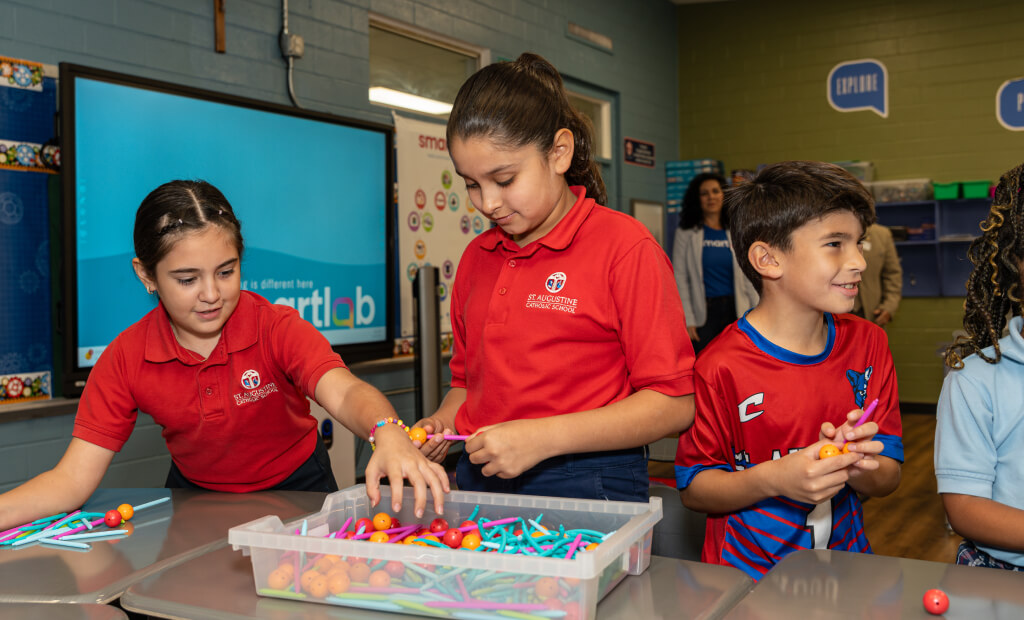
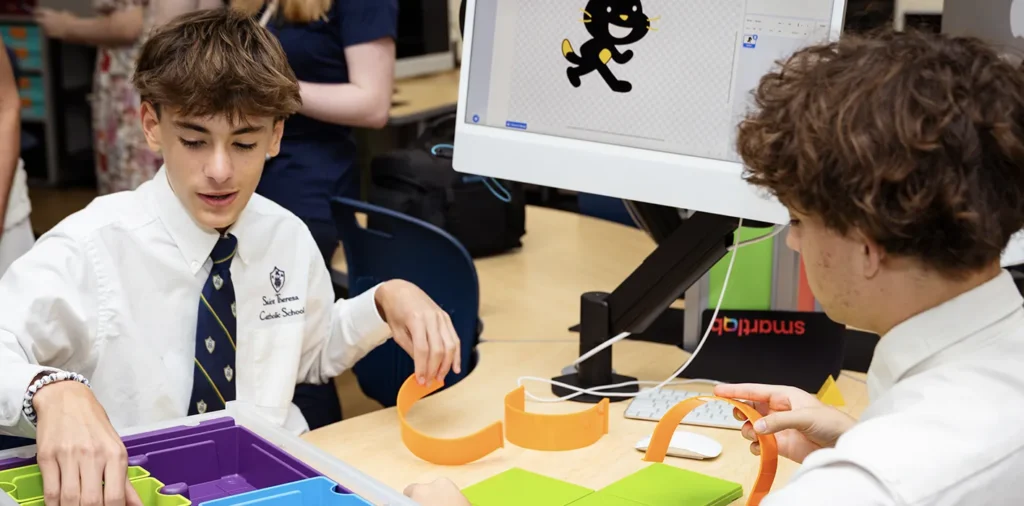
SmartLab learning environments play a meaningful role in this development. They provide students with opportunities to explore STEM concepts through hands-on inquiry, purposeful collaboration, and real-world problem-solving. In the SmartLab, learners take responsibility for their ideas, engage with authentic challenges, and develop the skills, mindsets, and resilience needed for future healthcare pathways.
Interested in exploring how integrated STEM learning can support your students’ career readiness? Connect with our team to continue the conversation.