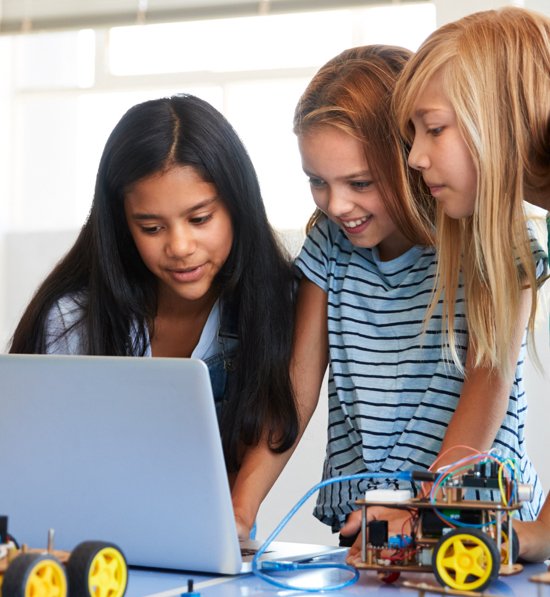
Student engagement is at levels I have never seen in my 23 years of teaching. Students love the lab and are constantly asking if they can come down in their free time to continue working with Ukits, or Engino, etc. I’ve never been busier as a teacher, but also have never had more fun. It’s encouraged me to gladly take work home and get more proficient in areas such as coding and circuitry. I see myself as a lifelong learner, and this lab not only meets the needs of my students but also fulfills my own growth as a facilitator and person. I appreciate my administration for investing in this lab and appreciate SmartLab for offering such an incredible product!!!
Transportation, Distribution, and Logistics
The Transportation, Distribution, and Logistics (TDL) career pathway is expected to see significant growth and transformation, largely driven by advances in automation, artificial intelligence (AI), and green technologies. These innovations are making STEM (Science, Technology, Engineering, and Mathematics) skills more critical for individuals entering this field, as the future of transportation and logistics will be shaped by the ability to work with advanced technologies, optimize complex systems, and address sustainability challenges.
This field plays a critical role in global commerce, everyday life, and technological innovation. Learning about TDL early fosters curiosity about how goods and services move from one place to another, encouraging problem-solving, critical thinking, and a greater awareness of the global economy.

Early exposure to the Transportation, Distribution, and Logistics career pathway benefits students
Teaching elementary students about theTDL career pathway equips them with valuable knowledge about an industry that impacts nearly every aspect of modern life. By exposing students to this pathway early, we help them explore a wide range of career options, foster an appreciation for innovation, and inspire them to become the future problem solvers and leaders who will shape the transportation systems of tomorrow.
Building Problem-Solving and Critical Thinking Skills
TDL careers revolve around complex systems of moving people, goods, and resources efficiently and safely. Introducing students to these concepts early helps them develop problem-solving skills by understanding how logistics networks function and how to optimize transportation processes. It encourages students to think about real-world problems, such as reducing traffic congestion, enhancing sustainability,
and improving delivery times.
Encouraging STEM Learning
TDL careers are heavily tied to STEM (Science, Technology, Engineering, and Mathematics) skills. From the design and operation of transportation systems to the technology behind autonomous vehicles and supply chain management, STEM is integral. Early exposure to TDL can inspire students to pursue STEM subjects and careers, helping them see practical applications of what they learn in the classroom.
Understanding Global Trade and the Economy
The movement of goods is essential to global trade and economic growth. By learning about how products are transported from factories to stores and consumers, students develop an early understanding of economics, international trade, and the interconnectedness of countries and industries. This broadens their awareness of the global economy and the role they can play in shaping it.
Exploring Innovation and Technology
The TDL industry is undergoing rapid transformation with innovations such as electric vehicles, autonomous trucks, drones, and smart logistics systems. Early exposure to this pathway introduces students to cutting-edge technology and sparks their curiosity about the future of transportation and logistics, paving the way for future innovators in these fields.
Fostering Sustainability and Environmental Awareness
Transportation is one of the largest contributors to carbon emissions, making sustainability a key focus in this field. Students can learn early about the importance of eco-friendly transportation solutions, such as electric vehicles, public transportation, and efficient logistics. This encourages them to think about how they can contribute to creating greener, more sustainable transportation systems in the future.
Introducing a Wide Range
of Career Opportunities
TDL offers a wide variety of careers, from truck drivers and pilots to supply chain managers, urban planners, logistics analysts, and engineers. Early exposure helps students understand the diverse roles within the industry, allowing them to explore different career paths that align with their interests, whether they are hands-on technical roles or more analytical, planning-focused careers.
STEM Skills Driving the Future of Transportation, Distribution and Logistics
The future of the Transportation, Distribution, and Logistics career pathway will be shaped by technological advances that demand strong STEM skills. As autonomous vehicles, AI-driven supply chains, and green logistics become more prevalent, individuals with a background in engineering, data science, and environmental science will be in high demand. The integration of STEM knowledge will be essential for addressing the industry’s challenges, such as optimizing efficiency, improving sustainability, and navigating complex global supply chains.
Key skills built through STEM with TDL
The integration of STEM knowledge will be essential for addressing the industry’s challenges, such as optimizing efficiency, improving sustainability, and navigating complex global supply chains.
Problem-Solving and Critical Thinking
STEM education encourages logical thinking and problem-solving, which are essential for optimizing transportation routes, managing complex supply chains, and troubleshooting technology-driven systems in real time.
Technical Proficiency
Proficiency in software, automation tools, and engineering principles allows professionals to work with cutting-edge technologies such as autonomous vehicles, robotics, and AI-driven logistics platforms.
Data Analysis and Decision-Making
STEM disciplines teach students how to analyze large datasets and derive actionable insights. This is particularly relevant in logistics, where data is used to predict demand, optimize delivery schedules, and manage inventory.
Innovation and Adaptability
The fast-paced changes in the TDL industry require professionals who are not only innovative but also adaptable. STEM fields encourage creativity and the ability to quickly adopt new technologies, which will be critical as the industry continues to evolve.
Hear from our happy clients.


“SmartLab Learning’s turnkey solutions allowed us to move quickly to implement a district-wide STEM program…the SmartLab Learning solutions plus the professional development allowed our students to be actively engaged in project-based learning immediately.”

“We are able to work with our students to get them career and college ready, and we do that K-12. SmartLabs help by getting students’ hands on projects and activities, getting them working with partners in the classroom, and getting them building something they would’ve never have imagined they could build…it’s actually shown our community what our students are capable of.”

“In our SmartLab, students become empowered and engaged as they use critical thinking, curiosity, and collaboration to apply content standards. I have yet to meet a student who doesn’t love this class or
benefit from this connected approach to learning.”
 Video
Video


Ready to start planning your SmartLab?
We’re excited to hear from you. Let’s change the way your students engage with math and science–in and outside the classroom.