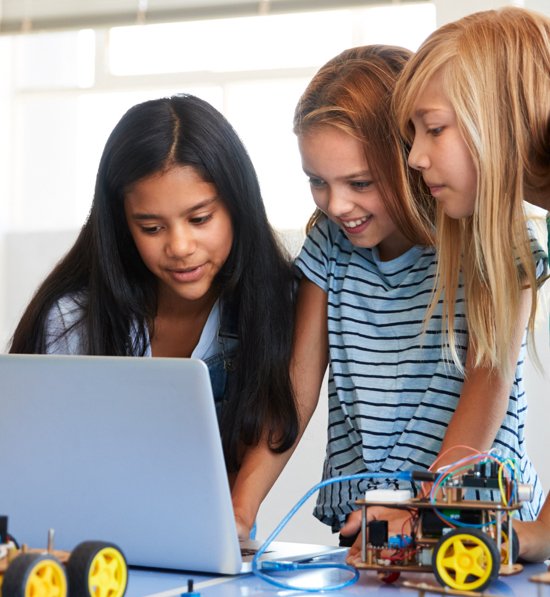
Student engagement is at levels I have never seen in my 23 years of teaching. Students love the lab and are constantly asking if they can come down in their free time to continue working with Ukits, or Engino, etc. I’ve never been busier as a teacher, but also have never had more fun. It’s encouraged me to gladly take work home and get more proficient in areas such as coding and circuitry. I see myself as a lifelong learner, and this lab not only meets the needs of my students but also fulfills my own growth as a facilitator and person. I appreciate my administration for investing in this lab and appreciate SmartLab for offering such an incredible product!!!

Entertainment,
Arts, and Media
The future of the Media, Arts, and Entertainment career pathway is deeply connected to STEM, as technological advances in AI, virtual reality, coding, and data analytics reshape the industry. STEM skills provide the foundation for success in creating innovative content, developing interactive experiences, and driving media forward. As the industry continues to evolve, early exposure to STEM concepts in media education will equip future professionals with the creative and technical expertise needed to thrive.
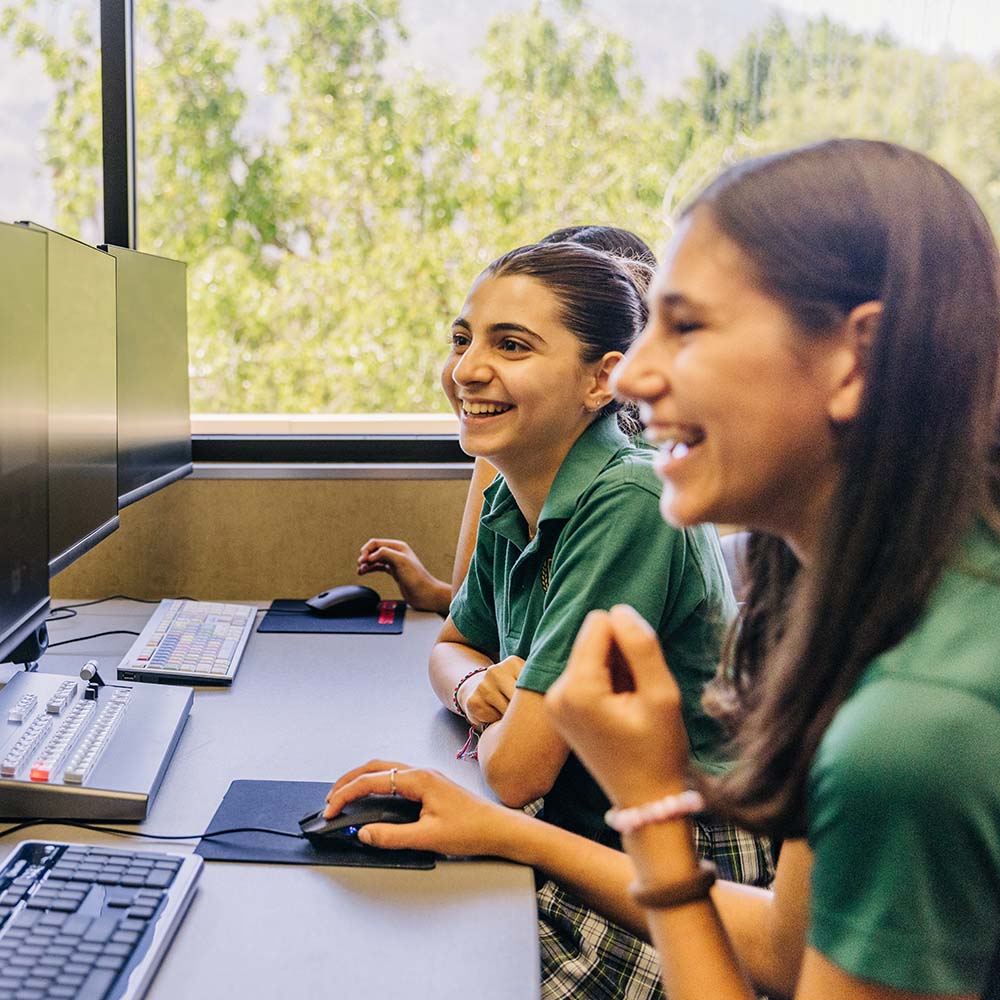
Early exposure to the Media, Arts, and Entertainment career pathway benefits students
Introducing elementary students to the Media, Arts, and Entertainment industry pathway early is crucial for several reasons. It allows them to explore their creativity, understand the impact of digital storytelling, and develop skills that are increasingly relevant in today’s technology-driven world.
FLIPTILES
Nurturing Creativity and Self-Expression
Creativity is one of the most important skills of the 21st century. Media, arts, and entertainment fields offer opportunities for students to express themselves through various forms of storytelling, music, visual arts, and digital content creation. Early exposure helps children develop confidence in expressing their ideas and creativity.
Building Digital Literacy
The media industry is highly connected to technology, from digital film editing to graphic design and social media management. As children become more immersed in digital tools from a young age, introducing them to this pathway equips them with the technical literacy needed to thrive in a media-rich world
Developing
Communication Skills
Effective communication is a foundational skill in the media, arts, and entertainment industry. Learning how to communicate through different mediums, whether through video, visual arts, or performance, helps students develop clarity in their messaging and storytelling—skills that are transferable across any career pathway.
Introducing Career Awareness and Opportunities
The media and entertainment industry is diverse, offering careers in filmmaking, graphic design, animation, broadcasting, game design, music production, and more. Early exposure helps students understand the variety of careers available and ignites interest in specific roles such as director, animator, sound engineer, or journalist.
Collaboration and Teamwork
Media and entertainment projects are often collaborative efforts. Whether working on a school play, producing a short film, or developing a podcast, students learn the value of teamwork and collective problem-solving. This collaboration builds interpersonal skills and prepares students for the real-world dynamics of working in creative teams.
Global Awareness and Cultural Appreciation
The media and arts industries often reflect culture and society. By exploring these pathways, students can gain an appreciation of diverse cultures, global perspectives, and the impact of media on societal narratives. This helps foster empathy and a more inclusive mindset from a young age.

Early exposure to the Media, Arts, and Entertainment industry pathway is vital for sparking interest in creative careers and equipping students with essential skills such as creativity, communication, and collaboration. By introducing elementary students to this pathway, we not only foster their artistic talents but also prepare them for an evolving digital landscape where media literacy and technology-driven creativity are essential for future success.
Key skills built through STEM with the Media, Arts and Entertainment career pathway
The future of the Media, Arts, and Entertainment career pathway is increasingly intertwined with STEM (Science, Technology, Engineering, and Mathematics), as technology continues to shape how content is created, distributed, and consumed.
Coding and Software Development
Learning programming languages opens up opportunities in game development, virtual production, and digital content creation. Software like Unity and Unreal Engine are often used to create interactive media and special effects in films.
Engineering for Visual Effects and Sound Design
The engineering behind special effects, audio production, and VR requires knowledge of physics, digital signal processing, and computer engineering, all integral to creating immersive and realistic entertainment experiences.
Mathematics for Animation and Graphics
Geometry, algebra, and calculus are used to create lifelike animations, graphics, and 3D models. In fields like animation and game development, professionals must calculate object movement, lighting, and shading to create visually compelling content.
STEM-Driven Innovation
Technologies like machine learning, AR/VR, and blockchain are pushing the boundaries of media and entertainment. For instance, blockchain technology is revolutionizing digital content distribution by offering new models for royalties and intellectual property protection.
Hear from our happy clients.
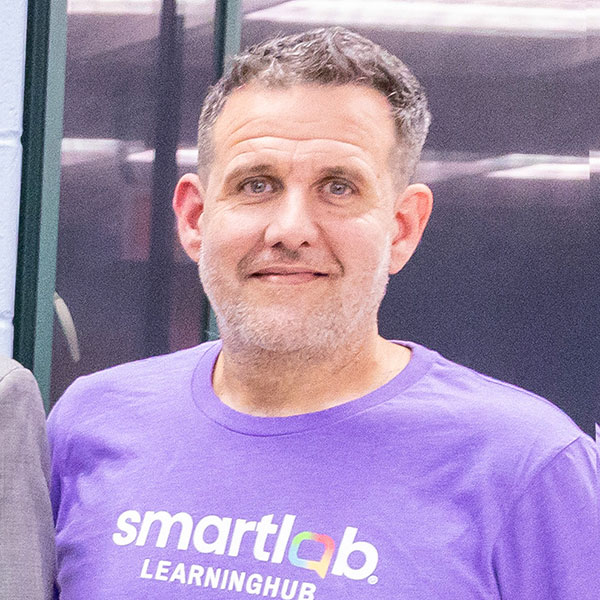

“SmartLab Learning’s turnkey solutions allowed us to move quickly to implement a district-wide STEM program…the SmartLab Learning solutions plus the professional development allowed our students to be actively engaged in project-based learning immediately.”
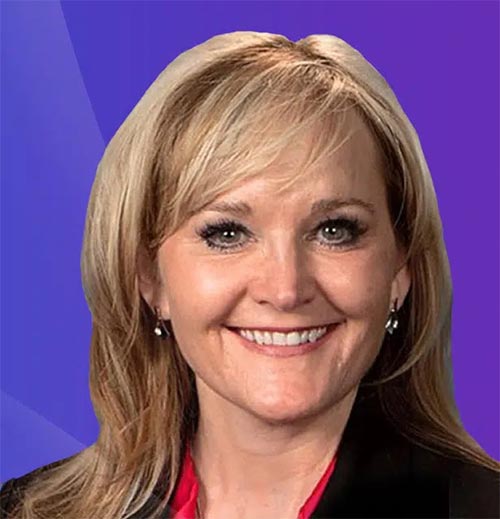
“We are able to work with our students to get them career and college ready, and we do that K-12. SmartLabs help by getting students’ hands on projects and activities, getting them working with partners in the classroom, and getting them building something they would’ve never have imagined they could build…it’s actually shown our community what our students are capable of.”
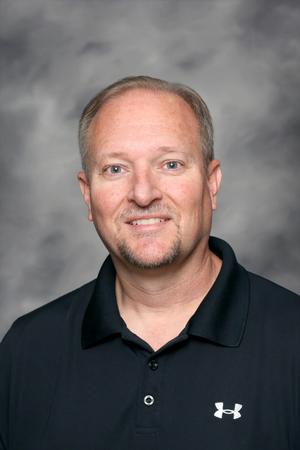
“In our SmartLab, students become empowered and engaged as they use critical thinking, curiosity, and collaboration to apply content standards. I have yet to meet a student who doesn’t love this class or
benefit from this connected approach to learning.”

 Video
Video

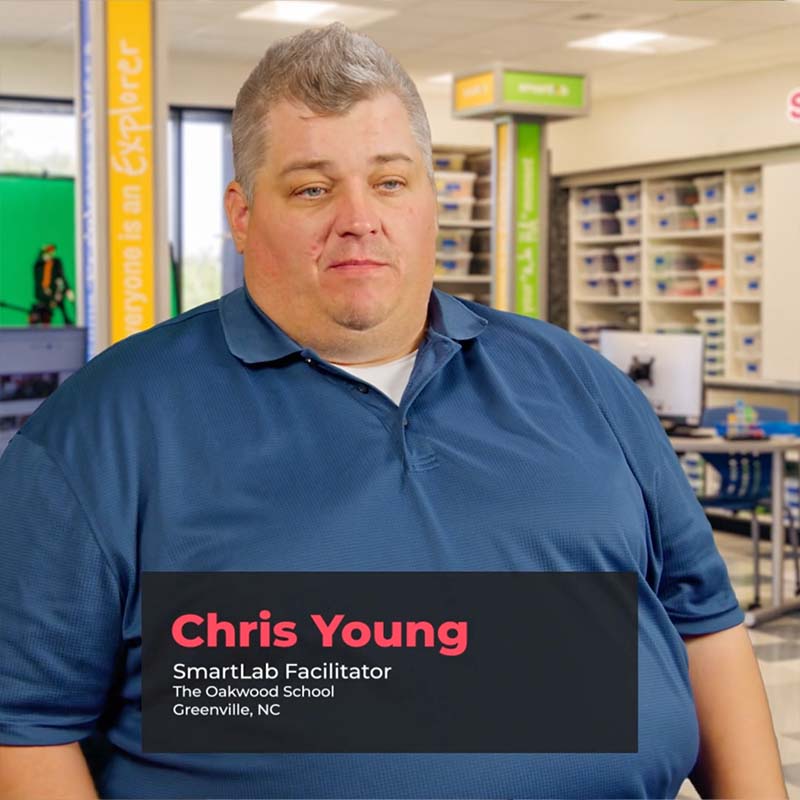
Ready to start planning your SmartLab?
We’re excited to hear from you. Let’s change the way your students engage with math and science–in and outside the classroom.